FCC Certification and Testing for the U.S. Market
Element helps you achieve FCC certification and testing for your wireless and electronic devices, so you can access the U.S. market faster. As both an FCC-recognized test lab (CAB) and an FCC-authorized certification body (TCB), Element manages your entire approval process from pre-compliance testing through your Grant of Equipment Authorization, under one roof.
What is FCC Certification and Testing at Element?
FCC certification is the equipment authorization route required for wireless devices containing radio transmitters before they can be sold in the US. These devices must be tested against the relevant FCC rule parts by an FCC-recognized test lab, with results submitted to an FCC-authorized Telecommunication Certification Body (TCB), which issues an FCC ID and Grant of Equipment Authorization once compliant. Many digital devices instead follow the Supplier's Declaration of Conformity (SDoC) route.
Here at Element, we operate FCC-recognized test labs and hold FCC-authorized TCB status, providing complete, end-to-end FCC certification and testing for the US market.
What can Element offer you for FCC Testing and Certification?
Key Services Offered
Key Services Offered
Element's FCC certification services provide comprehensive testing, documentation, and approval support for wireless technology devices requiring FCC regulatory approval. As your TCB partner, we handle everything from pre-compliance testing through submission of documentation required for your FCC filing, ensuring your products meet all US market entry requirements.
Our FCC conformity assessment (CAB) services include:
- Advice And Guidance
- Pre-Compliance Testing at the Product Development Stage
- FCC Formal Radio/Wireless Compliance Testing and Reporting
- FCC EMC Testing For Class A – Devices Used In Industrial, Commercial And Engineering
- FCC EMC Testing For Class B - Consumer Devices
- FCC Formal SAR/PSD Compliance Testing And Reporting
- FCC Hearing Aid Compatibility (HAC) testing and reporting
- FCC TCB Certification Services
- Testing to support your FCC Suppliers Declaration of Conformity (SDoC)
Methods and solutions offered
Methods and solutions offered
KDB inquiry development and support
PAG and MPAG process
Two FCC Authorization Procedures
System FCC Approval
System approval is the traditional FCC authorization process for equipment containing a radio transmitter. It covers the complete device — antenna, enclosure, radio, power supply, and electronics — and certification is required for each unique combination of radios. Multiple radios within the same host are allowed and can be covered by a single Grant of Authorization if they are all requested at the time of initial certification. If the device is modified, it may need to go through the entire approval process again. We can help with the correct process when there are changes made to an already approved device.
Modular FCC Approval
Modular approval enables radio module manufacturers to streamline certification by allowing a pre-approved module to be integrated into multiple host devices without requiring a full FCC certification for each product. This reduces cost and time to market while promoting a standardized RF interface.
If the module complies with FCC modular approval requirements and the integrator follows the grant conditions and installation instructions, the host device may not require additional intentional radiator testing. However, the final product must still meet applicable FCC requirements (e.g., labeling, unintentional radiator compliance, and RF exposure).
When an already-certified device requires modification, it may be able to be handled as a Permissive Change depending on the type of change being made. A Permissive Change application is submitted to the TCB rather than a full new certification. The type of Permissive Change application typically depends on the results of the testing. In each case, sufficient testing needs to be performed to evaluate the impact of the change:
- Class I Permissive Change: There are no changes in the test results as was originally reported to the FCC during initial certification. Does not require filing to the FCC;
- Class II Permissive Change (C2PC): Test results from the changed device impact the RF emissions or reported levels as compared to the original filing. A C2PC requires TCB review and filing the C2PC with the FCC;
- Class III Permissive Change (C3PC): These are specifically used for devices that were originally approved as a Software Defined Radio. C3PC’s are filed with a TCB for review and approval and are submitted to the FCC.
Element's TCB handles Permissive Changes for any device — including those originally certified by a different TCB.
For cellular devices, FCC certification is required in addition to any PTCRB certification. Element handles both simultaneously, and can co-locate FCC testing with PTCRB, ISED, carrier acceptance, HAC and OTA performance testing in a single program.
Which labs offer this service
Which labs offer this service
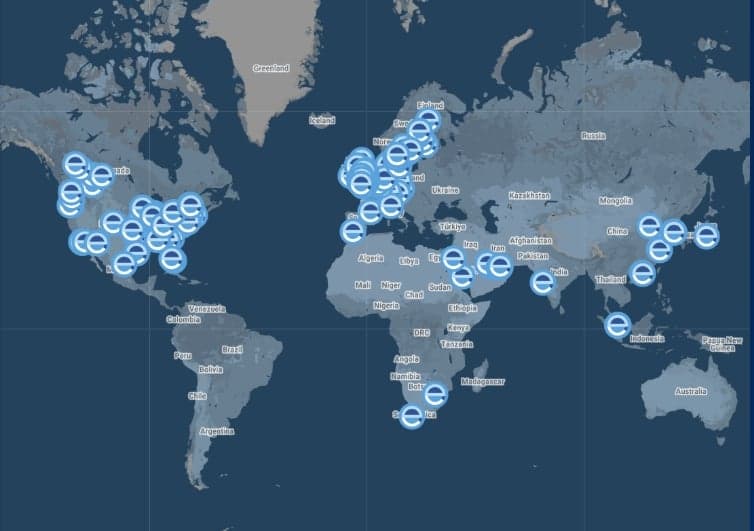
Our global network of FCC-recognized CAB test labs is easily accessible wherever your operations are based, and conveniently located across the U.S., Europe and Asia.
Element TCB locations: Columbia MD, (just 3 blocks from the FCC OET Laboratory office), Portland OR, and Skelmersdale UK – enable end-to-end product certification services closely coordinating with any of our FCC CAB test labs.
Element CAB locations:
United States: Columbia MD, San Jose (Morgan Hill) CA, Fremont CA, Irvine CA, Minneapolis (Brooklyn Park) MN, Plano TX, Portland (Hillsboro Evergreen) OR, Seattle (Bothell 120th) WA, Boxborough MA, Rockford IL, Longmont CO, and Chicago (Mt. Prospect) IL.
United Kingdom: Skelmersdale, Surrey Hills, Hull, Malvern, Wimborne.
Germany: Straubing.
South Korea: Yongin (Unhak – 2).
Find where your nearest Connected Technologies lab is on our Locations Page.
Streamlined testing programs
Streamlined testing programs
When you choose Element for FCC certification, you gain access to our full range of market access services in coordinated programs that reduce duplicate testing and accelerate your worldwide product launch:
- ISED certification for Canada, managed alongside your FCC program
- CE Marking under the RED for Europe, plus other approvals through global market access
- EMC testing, RF testing, and SAR/RF exposure testing
- PTCRB certification and carrier approvals for cellular devices
- CTIA OTA performance and HAC testing
- NRTL electrical safety testing
- Wi-Fi Alliance, Qi, and Bluetooth SIG qualification
Standards we test to and products we test
- Unintentional Radiators – FCC Part 15 Subpart B
- Intentional Radiators – FCC Part 15 Subpart C
- Unlicensed PCS Devices – FCC Part 15 Subpart D
- U-NII with DFS Intentional Radiators – FCC Part 15, Subpart E
- U-NII without DFS Intentional Radiators – FCC Part 15, Subpart E
- UWB Intentional Radiators – FCC Part 15, Subpart F
- BPL Intentional Radiators – FCC Part 15, Subpart G
- White Space Device Intentional Radiators – FCC Part 15, Subpart H
- Industrial, Scientific, and Medical Equipment – FCC Part 18
- Hearing Aid Compatibility (HAC) – FCC Part 20
- Signal Boosters – FCC Part 20, Part 90.219
- Commercial Mobile Services – Part 22 (cellular), Part 24, Part 25 (below 3 GHz), Part 27
- General Mobile Radio Services – Part 22 (non-cellular), Part 90 (below 3 GHz), Part 95 (below 3 GHz), Part 97 (below 3 GHz), Part 101 (below 3 GHz)
- Citizens Broadband Radio Services – Part 96
- Maritime and Aviation Radio Services – Part 80, Part 87
- Microwave and Millimeter Bands Radio Services - Part 25 (above 3 GHz), Part 30, Part 74, Part 90 (above 3 GHz), Part 95 (above 3 GHz), Part 97 (above 3 GHz), Part 101
- Broadcast Radio Services – Part 73, Part 74 (below 3 GHz)
- RF Exposure - SAR and Time-Averaged SAR (TAS) (KDB 865664)
Consumer Electronics & IT Equipment
- Smartphones and tablets
- Wearable consumer products (watches, earbuds, glasses, etc.)
- Laptops and desktop computers
- Wi‑Fi routers and mesh systems
- Bluetooth peripherals (headsets, keyboards, mice)
- Smart TVs and streaming devices
- Game consoles
Telecommunications & Mobile Infrastructure
- Mobile phones (LTE, 5G)
- Small cells and base stations
- Repeaters and signal boosters
- Two‑way radios
- Paging systems
Internet of Things (IoT) & Smart Devices
- Smart speakers and smart displays
- Smart thermostats and lighting systems
- Asset trackers and RFID devices
- Smart meters
- Wearable devices
- Wireless Power Transfer (WPT)
Industrial, Scientific & Medical (ISM) Equipment
- Microwave ovens
- RF heaters and sealers
- Medical diathermy equipment
- Industrial RF processing machines
- Wireless Power Transfer (WPT)
Automotive & Transportation
- Vehicle infotainment systems (V2X including C-V2X)
- Bluetooth and Wi‑Fi modules in vehicles
- Tire pressure monitoring systems (TPMS)
- Telematics and V2X (including C-V2X) modules
Medical Devices & Healthcare Technology
- Wireless patient monitors
- Medical telemetry systems
- Implant communication controllers (external components)
- Diagnostic equipment with digital electronics
- Wireless Power Transfer (WPT)
Broadcasting, Audio & Video Equipment
- Wireless microphones
- TV and radio receivers
- Broadcast auxiliary equipment
- Set‑top boxes
Security, Surveillance & Access Control
- CCTV and IP cameras
- Wireless alarm systems
- Access control readers
- Video doorbells
Your Challenges, Our Solutions
Unclear Rules for New Products
Complex FCC Regulations
Time-to-Market Pressure
Multi-Market Certification Burden



Why choose Element?
FCC-Authorized Product Certification
One Partner, Worldwide Market Access
Reduce Risk, Faster Market Entry
Independent, Accredited Certification Body
3 TCB LocationsFCC-authorized, Element has 3 TCB locations worldwide for product certification.
19 CAB Test Labs WorldwideFCC-recognized labs across the US, Europe, and Asia.
< 1 MileElement Columbia MD is 3 blocks from the FCC OET office
ISO/IEC 17065Element has operated as an accredited TCB since the program's inception.
Frequently asked questions
What is an FCC TCB and why should I use one?
A Telecommunications Certification Body (TCB) is a private organization recognized by the FCC to evaluate and certify radio devices on behalf of the Commission. TCBs are accredited under ISO/IEC 17065 and designated by NIST. They offer competitive pricing due to market competition among TCBs, and a closer working relationship that makes first-time certification success more achievable. In December 2014, the FCC made TCBs the only route to FCC certification for most device categories. Element is one such FCC-recognized TCB with 3 worldwide locations.
What is an FCC Grant of Equipment Authorization?
An FCC Grant of Equipment Authorization is the official authorization issued by a TCB on behalf of the FCC confirming that a device meets applicable FCC rules and is authorized to be placed on the US market. The Grant is issued following successful evaluation of test reports, technical documentation, labelling, and user materials. It is posted immediately to the FCC's public database when issued. The Grant remains valid indefinitely as long as the equipment remains unchanged; modifications may require a Permissive Change application or new certification depending on the scope of the change.
What FCC rule parts are most commonly relevant for cellular devices?
Cellular, PCS, and 5G NR devices are primarily covered by FCC Rule Parts 22, 24, 27, and Part 30 for 5G NR FR2 devices. Other rule parts such as Part 90 or 96 may apply depending on what bands are being supported. All cellular devices need to comply with the minimum set of test requirements as defined in FCC Part 2 Subpart J. These minimum requirements also include RF Exposure compliance and may include SAR evaluation testing if the device is portable by FCC definitions. In addition, multi-radio devices that include Wi-Fi, Bluetooth, or other unlicensed radio technologies must also satisfy FCC Part 15 requirements for those radio components. Element's engineers assess which rule parts apply to your specific device configuration and develop a test plan that addresses all applicable requirements.
What's the difference between FCC and ISED certification, and can Element handle both?
Yes. Element holds both FCC TCB status (U.S.) and ISED FCB status (Canada). Although the two certifications are separate — FCC is not accepted in Canada and ISED is not accepted in the U.S. — the test scopes overlap significantly, particularly for cellular and radio devices. Element manages both programs simultaneously, sharing test configurations where standards permit, and issuing both the FCC Grant of Equipment Authorization and the ISED Certificate of Acceptance. Products are then listed on both the FCC's public database and Canada's Radio Equipment List (REL), and are then available for sale in both the U.S. and Canada.
What documentation is needed for FCC certification?
Required documents for submission to the TCB and eventual upload to the FCC include test reports, technical documentation such as schematic diagrams, bills of materials, Theory of Operation, plus the User's Manual, labelling exhibits, and required attestations from the applicant. Element TCB maintains lists for all application types as well as attestation templates for applicant use.
What accreditations does Element have?
Element holds a broad range of ISO/IEC 17025 accredited testing services and is an accredited ISO/IEC 17065 Certification Body. For Europe, Element is a Notified Body for the Radio Equipment, EMC, and ATEX Directives, and an Approved Body for the equivalent UK regulations. For North America, Element is an FCC TCB, HazLoc Certification Body, and NRTL for the U.S., and an FCB for Canada. In Asia, Element is a KC Certification Body for Korea and a CAB for Japan. Element is also a certification body under the IECEE CB Scheme, making Element one source for virtually worldwide market access.
How do Permissive Changes work for already-certified devices?
When a previously certified device requires modification, a Permissive Change application is submitted instead of a completely new certification. Class I changes (minor modifications with no impact on initial compliance) do not require filing with the TCB or FCC. Class II Permissive Changes require a filing to be submitted to the TCB for review, and will be uploaded to the FCC database after TCB’s approval. Class III Permissive Changes also require filing with the FCC and are specific to devices that were initially approved as a Software Defined Radio. TCBs, like Element, can process Permissive Changes for any device they have certified and can also accept Permissive Changes for devices originally certified by a different TCB. Element handles all three classes of Permissive Changes, and can provide checklists for the necessary documentation needed for the Permissive Change filing.
Can I reuse previous FCC test data?
In some cases, existing FCC test data may support a new application, permissive change, module integration, white-label product, or Change in Identification. Element reviews the original approval, product differences, grant conditions, and technical documentation to determine whether data reuse, spot testing, or full retesting is appropriate.
What is the significance of the FCC's new TCB security rules?
In May 2025 the FCC adopted new rules (ET Docket No. 24-136) prohibiting any TCB, test lab, or laboratory accreditation body owned or controlled by a designated foreign adversary or other prohibited entity from participating in the FCC equipment authorization program. Multiple test labs have already lost FCC recognition under these rules, and responsible parties using the SDoC process must now certify that their test lab is not a prohibited entity. Element's TCBs and test labs are not subject to any of these restrictions and remain fully operational for all FCC certification services.
By testing with an FCC Trusted Test Lab (like Element), the FCC is developing a process to streamline the pre-approval guidance procedures - especially important for our cellular customers who often have complex certification requirements that include pre-approval guidance for the FCC.
Manufacturers should verify the current status of any lab or TCB they use via the FCC's test firm search.
Explore our global network of labs and find your nearest location
VIEW ALL LOCATIONSRelated services
Product Certification Services
Unlock global market access with Element's expert product certification services. Streamline compliance for CE, UKCA, FCC and more. Fast, reliable, and global. Learn More.
ISED Certification for Canada
Get ISED certification faster with Element's end-to-end testing and certification services, documentation support, and FCB authorization for seamless Canadian market access.

Wireless Device Testing & Certification
Get your wireless devices to market faster with Element's accredited testing services. Expert guidance through compliance, certification and global approvals for all wireless technologies.
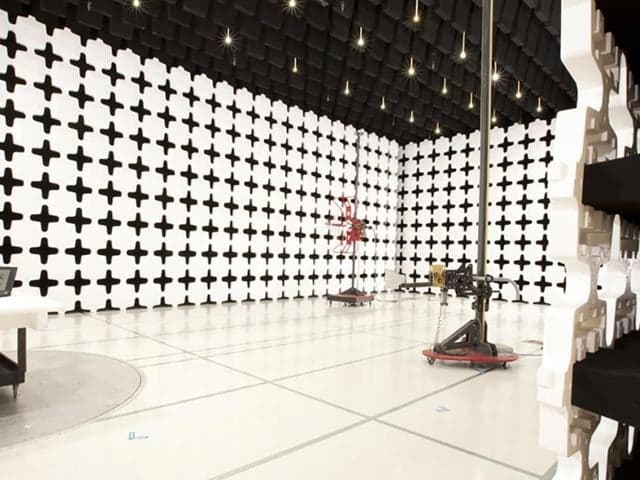
Electromagnetic Compatibility (EMC) Testing & Electromagnetic Interference (EMI) Testing & Certification
Element provides accredited EMC and EMI testing and certification services, helping businesses meet regulatory requirements, reduce costly redesigns, and bring products to market faster through expert compliance support.
US NRTL and Canadian SCC Certification Services
Element's NRTL and SCC accredited Certification Services provide comprehensive safety testing, factory inspection, and certification support to help you achieve US NRTL and Canadian SCC certification faster.
Global Market Access (GMA) Services
Accelerate international product certification with Element's Global Market Access Services. Navigate complex regulations, reduce testing time & get to market faster.