

How Does Qualification Testing Support Missile Production Readiness?
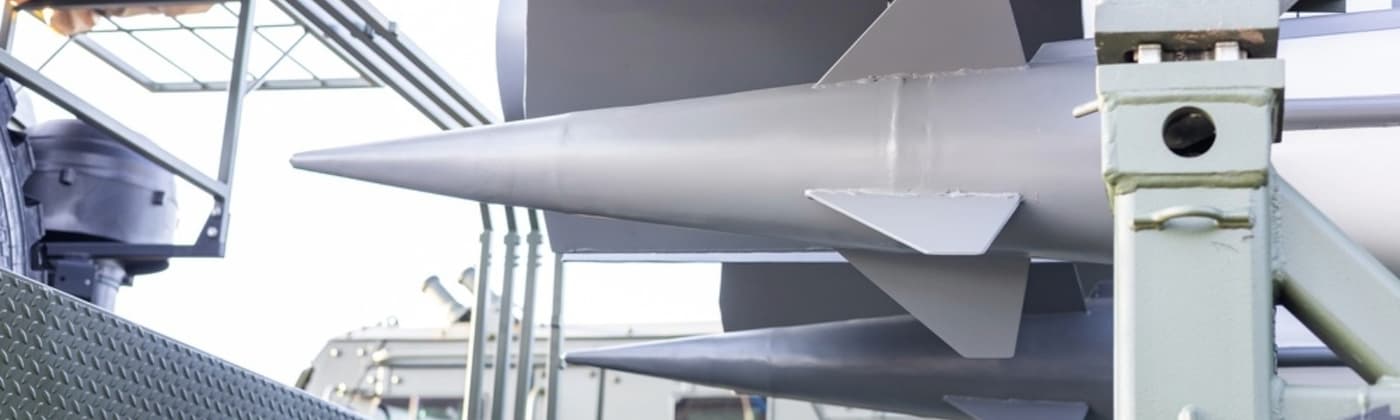
Qualification testing plays a critical role in moving missile and ordnance programs from development into production. In this article, Gary Ostendorf, Business Development Director for Element Aero, Space & Defense, explains how disciplined qualification strategies build engineering confidence, reduce risk, and support manufacturing readiness throughout the program lifecycle.
Why is qualification testing important for missile production readiness?
Defense programs face increasing pressure to deliver capability more quickly while maintaining confidence in performance and reliability. Qualification testing provides the engineering evidence needed to determine whether a design, manufacturing process, and supplier base are ready to support production. ¹ ²
One of the most common misconceptions is that qualification is a final compliance event. In practice, successful programs treat qualification as an ongoing process that begins early in development and continues through production.
As Gary Ostendorf notes:
"Qualification should confirm engineering confidence, not become the first time critical questions are answered."
When organizations discover significant issues late in a program, they often face redesigns, additional testing, supplier impacts, and schedule delays. Programs generally do not fail because they performed too much testing. They struggle because critical information was discovered too late.
How can programs build qualification evidence before formal testing begins?
The strongest programs establish qualification evidence throughout development rather than waiting for a single pass-fail campaign.
A key starting point is requirements traceability. Every qualification activity should be clearly linked to:
- The requirement or risk being evaluated
- Defined test conditions
- Acceptance criteria
- Configuration being tested
- Program decisions informed by the results ¹ ²
This approach helps ensure that testing activities generate meaningful evidence rather than isolated data points.
Missile and ordnance systems are inherently complex, involving:
- Guidance electronics
- Seekers
- Propulsion systems
- Communications equipment
- Sensors
- Structures
- Embedded software
- Energetic components
- Advanced materials
Because these elements interact with one another, qualification programs must evaluate performance across realistic operating environments that include transportation, storage, launch, flight, handling, and deployment conditions. ³
Why does production-representative configuration matter?
Qualification evidence is only valuable if it accurately reflects the hardware that will ultimately be produced.
Organizations sometimes generate test data using prototype configurations that differ significantly from production hardware. While this information may be useful during development, it may not provide sufficient confidence for production decisions.
Production-representative articles should closely reflect:
- Approved designs
- Materials
- Software versions
- Manufacturing methods
- Supplier controls
- Quality processes
- System interfaces
Element's experience across defense programs shows that configuration control is one of the most important foundations of a successful qualification strategy. Engineering drawings, bills of material, software revisions, manufacturing records, test procedures, and final reports should remain connected throughout the program lifecycle.
This traceability allows teams to determine whether existing evidence remains valid when future design changes occur.
What causes late-stage qualification failures?
According to Gary Ostendorf, four recurring issues appear across many defense programs:
"The most common late-stage failures are rarely caused by a single test result. They usually stem from qualification activities being disconnected from production reality. Teams qualify one configuration, then attempt to manufacture another."
Gary notes that qualification risk often increases when:
- Production-representative hardware is introduced too late in the program
- Supplier changes occur without fully assessing qualification impacts
- Configuration management breaks down between development and production
- Manufacturing readiness activities are treated separately from qualification planning
In one defense program, a production supplier change occurred after qualification was completed. Although the change appeared minor, additional verification identified material differences that required further testing before production could proceed. Because the issue was discovered before full-rate production, the program avoided significantly larger schedule and cost impacts.
"Successful qualification programs continually ask a simple question: would I still have confidence in this result if the product enters production tomorrow?"
How can programs maintain confidence after qualification is complete?
Qualification does not end when the first production units are built.
Defense programs continue to evolve through:
- Supplier changes
- Component obsolescence
- Software updates
- Manufacturing improvements
- Production rate increases
- Material substitutions
Each change raises an important question: does the original qualification evidence still apply?
Successful organizations implement structured change-assessment processes to evaluate the impact of proposed modifications. Depending on the level of risk, the appropriate response may include:
- Engineering analysis
- Similarity assessments
- Verification testing
- Partial requalification
- Full qualification testing
Programs that maintain organized, traceable evidence can make these decisions more efficiently while avoiding unsupported assumptions. ²
What role does qualification play during the transition to production?
As a program moves from Engineering and Manufacturing Development (EMD) into Low-Rate Initial Production (LRIP) and eventually Full-Rate Production (FRP), qualification supports much more than design verification. ¹ ²
The focus shifts toward broader production-readiness questions:
- Can the product be manufactured repeatedly?
- Are suppliers operating under control?
- Do inspection processes effectively identify variation?
- Is the manufacturing process capable of maintaining quality at higher volumes?
- Can future changes be managed without increasing risk?
In Element's experience, qualification is most valuable when it is integrated with manufacturing readiness activities rather than treated as a standalone testing milestone.
When qualification results are evaluated alongside supplier performance, process capability, material controls, and production-quality metrics, decision-makers gain a more complete understanding of residual program risk.
Qualification testing delivers the greatest value when it is treated as a continuous risk-reduction process rather than a final compliance event. Programs that establish traceable requirements, validate production-representative hardware, retire technical risk through development testing, and maintain qualification evidence throughout production are better positioned to transition successfully into manufacturing.
To learn more about qualification approaches for defense systems, explore Element's resources on Missile & Ordnance Testing, MIL-STD-810 Environmental Testing, and Military EMC Testing. Readers can also learn more about Element's defense expertise and technical capabilities through our Defense and About Us pages.
Footnotes:
- Department of Defense Instruction (DoDI) 5000.85, Major Capability Acquisition.
- Manufacturing Readiness Level (MRL) Deskbook, U.S. Department of Defense.
- MIL-STD-810H, Environmental Engineering Considerations and Laboratory Tests.
By Engaged Expert

Related Resources

Related Services
Missile and Ordnance Testing
Connected missile and ordnance testing helps you qualify hardware, evaluate materials, investigate failures, and support production and sustainment.
MIL-STD-810 Testing Services
Element's MIL-STD-810 testing services validate military and defense products under extreme conditions, delivering reliable, accredited results for compliance and performance qualification.

Military EMC Testing Services
Expert Military EMC Testing & MIL-STD 461 compliance for defense equipment. Validate performance across ground, air & sea applications with our accredited fast-track testing solutions.

Defense Product and System Testing Services
Element has over 50 years of experience working with a wide range of Defense Product and System manufacturers from the initial concept of their products and on to the complex testing that is required of modern defense equipment.