

Navigating ISO 80601-2-61:2026: What’s Changing and What the New Release Means for Pulse Oximeter Validation

The 2026 release of ISO 80601-2-61 transforms pulse oximeter clinical validation by expanding participant, dataset, and accuracy requirements. In this whitepaper, author Evan Ammidown, Engineering Manager at our Element Boulder lab, offers guidance to help manufacturers design compliant, statistically robust studies in accordance with the updated requirements.
This white paper explains how ISO 80601-2-61:2026 transforms pulse oximeter clinical validation by expanding participant, dataset, and accuracy requirements and offers guidance to help manufacturers design compliant, statistically robust studies.
Key Takeaways:
- Compliance with ISO 80601-2-61:2026 will require more rigorous and representative clinical validation studies.
- Device performance must demonstrate consistency across diverse study populations.
- Early study design and preparation are critical to achieving compliance while avoiding delays and retesting.
Why Is Pulse Oximeter Clinical Validation Changing?
Pulse oximeters estimate arterial oxygen saturation (SpO₂) non-invasively by measuring how light is absorbed by oxygenated and deoxygenated blood. Although the technology appears straightforward, demonstrating clinically acceptable performance across different users, saturation ranges, and operating conditions is considerably more complex.
The 2026 release of ISO 80601-2-61 recognizes that overall accuracy results can sometimes conceal performance differences across participant groups. A device may achieve an acceptable aggregate result while providing less consistent performance within certain populations or portions of the measurement range.
As a result of various discussions surrounding demographic representation, skin pigmentation, and other factors that influence device performance, regulators and standards organizations have placed greater emphasis on ensuring validation studies demonstrate performance across a broader and more representative participant population. The result is a significantly more precise framework for validation to improve confidence that pulse oximeters perform consistently for the patients that rely on them.
What Is the Scope of ISO 80601-2-61:2026?
ISO 80601-2-61:2026 establishes particular requirements for the basic safety and essential performance of pulse oximeter equipment. Within the standard, clinical validation plays a central role because it provides the evidence needed to demonstrate that oxygen saturation measurements accurately reflect reference values obtained during controlled testing.
While many foundational concepts from the 2017 edition remain familiar to manufacturers, study design according to the 2026 release has become substantially more prescriptive. The revised standard introduces updates to terminology, participant representation, statistical analysis, and performance acceptance criteria. Understanding these changes early can help organizations avoid costly redesigns, repeated testing, or delayed regulatory submissions.
What Changed Between the 2017 and 2026 Editions?
The 2026 edition fundamentally changes both the scale and structure of clinical validation. Key differences include:
Larger Clinical Studies
One of the most significant changes is the increase in the minimum participant count from 10 to 24 participants. This expansion creates greater recruitment complexity and longer study timelines. In practice, many manufacturers may need to enroll more than the minimum requirement to ensure they still meet the standard's statistical confidence requirements, subgroup representation targets, and saturation-range distribution requirements after exclusions and data review. [6]
Representation Requirements
The revised standard introduces a more detailed criteria for demographic representation. Firstly, studies must balance recruitment efforts by including at least 33% representation from each biological sex per study.
The updated standard also introduces mandatory pigmentation categorization using both objective and subjective methods. Trained observers must perform Monk Skin Tone (MST) evaluations as well as assess spectrophotometer-based measurements used to calculate Individual Typology Angle (ITA) values. The established minimum representation expectations within pigmentation categories ensure that performance can be assessed across a broader range of users. [6]
Dataset Controls
Focus has shifted from simply collecting 200 data pairs to ensuring balanced participant-level contributions. The revised requirements include:
- Average of 20 ±4 data pairs per participant
- Minimum of 16 pairs per participant
- Maximum of 30 pairs per participant
Additionally, approximately one-third, but no less than 25%, of data pairs must fall within each saturation range
- 70% to <80% SaO₂
- 80% to <90% SaO₂
- 90% to 100% SaO₂
This creates new operational challenges because study teams must monitor both participant contributions and saturation distribution beyond initial enrollment. A population that satisfies the quotas at enrollment may not satisfy them after exclusions. [6]
In our experience at Element Boulder, we’ve found tracking data and demographic distributions in real time to be critical for study success. Ongoing monitoring helps ensure the final analyzable population satisfies all saturation, pigmentation, and representation requirements before enrollment is completed. Without this visibility, manufacturers may discover imbalances only after substantial data collection has already occurred, potentially requiring additional testing.
Pigmentation Differential Bias
The 2026 edition also introduces a new practice to evaluate pigmentation differential bias. The goal is to identify differences between pigmentation groups that may not be apparent from overall accuracy calculations alone.
Within the interval between 80% and 90% SaO₂ centered at 85%, the allowable differential bias between pigmentation groups should not exceed 2.5%. This suggested target reinforces the standard's emphasis on understanding device performance across representative patient populations rather than relying exclusively on aggregate metrics. [6]
Tighter Performance Expectations
The bar for performance acceptance has also been raised.
The root mean square error (A RMS) requirement has been reduced from ≤4.0% to ≤3.0% across 70% to 100% SaO₂. Compliance must now be demonstrated with 95% confidence, introducing a more rigorous statistical framework than previous editions. [6]
Together, these changes mean manufacturers must not only achieve stronger performance but also demonstrate greater confidence that observed results accurately represent expected real-world performance.
What Does This Mean for Existing Products?
Many manufacturers are now asking whether products validated under previous requirements will remain competitive under ISO 80601-2-61:2026.
The answer depends on the strength of existing clinical evidence, available calibration data, and overall performance margins.
An independent evaluation published in Anesthesia & Analgesia illustrates the challenge. Researchers conducted a study using a controlled desaturation protocol with 24 participants. Researchers found that 28 devices satisfied the 2017 ARMS criterion, but only 22 met the tighter 2026 requirement. The study also showed that some devices could pass or fail depending on participant selection, highlighting the importance of the new confidence-based approach. [7]
The takeaway is clear: compliance under the previous edition does not guarantee compliance under ISO 80601-2-61:2026.
When evaluating their own compliance, organizations should begin by assessing:
- Existing clinical validation datasets
- Calibration datasets
- Probe and sensor design
- Signal processing performance
- Product family relationships
Conducting a gap assessment early can help identify areas requiring additional evidence, testing, or product improvements before submission.
How Should Manufacturers Prepare?
Organizations preparing for the transition should begin with the data they already have.
Reassess Existing Clinical Evidence
Manufacturers should:
- Recalculate performance using the new confidence-based criteria
- Evaluate subgroup performance where pigmentation data exists
- Review participant overlap between calibration and validation datasets
Historical studies often contain valuable information, but those datasets must be examined against the revised requirements to determine whether they remain sufficient.
Examine Calibration Data
Calibration decisions can significantly influence clinical validation outcomes. Manufacturers should determine whether calibration populations adequately reflect current expectations, identify potential sources of differential bias, and assess whether recalibration activities may be necessary prior to validation testing.
Evaluate Product Design
Teams should carefully review sensors, optics, probes, and signal processing algorithms while also assessing probe-to-probe variability and low-saturation performance.
Our research at Element Boulder indicates that the lowest saturation decade, 70% to <80% SaO₂, is often the most vulnerable area for achieving sufficient representation across pigmentation groups. In particular, either the lightest or darkest pigmentation categories may become underrepresented if distributions are not closely monitored during enrollment. Real-time tracking of saturation and pigmentation distributions is therefore essential. Addressing imbalances early typically requires far less additional data collection than attempting to correct the problem later, when a much larger dataset must be rebalanced.
Plan Clinical Studies Early
Early planning is increasingly important under the new requirements.
These are some best practices to ensure study success:
- Engage research facilities in advance
- Confirm recruitment feasibility
- Verify access to compliant pigmentation assessment tools
- Establish statistical and operational plans before enrollment begins
At Element Boulder, study success is often directly correlated with the amount of preparation completed before the first participant is enrolled. Leveraging existing clinical evidence, evaluating product family relationships, assessing potential gaps, and mapping realistic timelines can help manufacturers avoid preventable delays and improve the likelihood of a successful study outcome.
Moving Forward Under ISO 80601-2-61:2026
ISO 80601-2-61:2026 represents more than a documentation update. The revised standard requires manufacturers to take a broader view of clinical evidence, participant representation, and device performance across intended users.
Organizations that begin evaluating legacy data, calibration strategies, and validation plans now will be better positioned to navigate the transition efficiently. By approaching compliance as both an engineering challenge and a clinical evidence challenge, manufacturers can reduce regulatory risk while maintaining confidence that their pulse oximeter products deliver accurate and reliable performance across diverse patient populations.
Resources
[2] EN ISO 80601-2-61:2026, European adoption of ISO 80601-2-61:2026, CEN.
[4] IEC 60601-1:2005+AMD1:2012+AMD2:2020, Medical electrical equipment — Part 1: General requirements for basic safety and essential performance.
[5] ISO 80601-2-61:2017 (corrected version 2018-02), second edition — withdrawn, retained for comparison.
[6] ISO 80601-2-61:2026, Medical electrical equipment — Part 2-61: Particular requirements for basic safety and essential performance of pulse oximeter equipment. Third edition, published 10 April 2026. ISO/TC 121/SC 3.
[8] Regulation (EU) 2017/745 on medical devices (MDR), Annex I.
Conclusion
ISO 80601-2-61:2026 redefines pulse oximeter clinical validation testing by requiring larger and more diverse participant studies, dual pigment assessment methods, stricter accuracy and confidence criteria, and new measures of differential bias.
Manufacturers can best navigate the transition by evaluating existing data under the new standards, addressing calibration-related bias early, designing comprehensive studies that satisfy multi-market needs, and securing research facility capacity in advance.
Element supports pulse oximeter manufacturers throughout the process by connecting clinical validation expertise, testing services, compliance guidance, and technical assessment capabilities.
Whether evaluating legacy data, planning new studies, assessing product families, or designing validation programs that align with the revised standard, manufacturers can benefit from an integrated approach that bridges engineering and regulatory requirements.
As the industry transitions to ISO 80601-2-61:2026, organizations that proactively assess their data, study designs, and product performance will be best positioned to demonstrate compliance and maintain confidence in the accuracy of their pulse oximetry technologies.
By Engaged Expert

Related Industries
Download
Navigating ISO 80601-2-61:2026 whitepaper

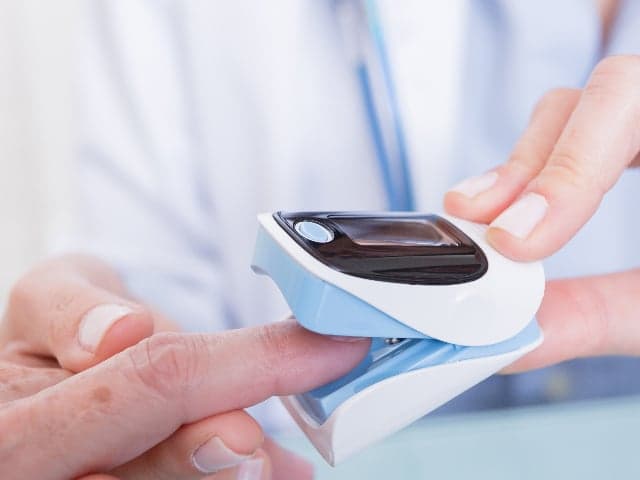
Related Services
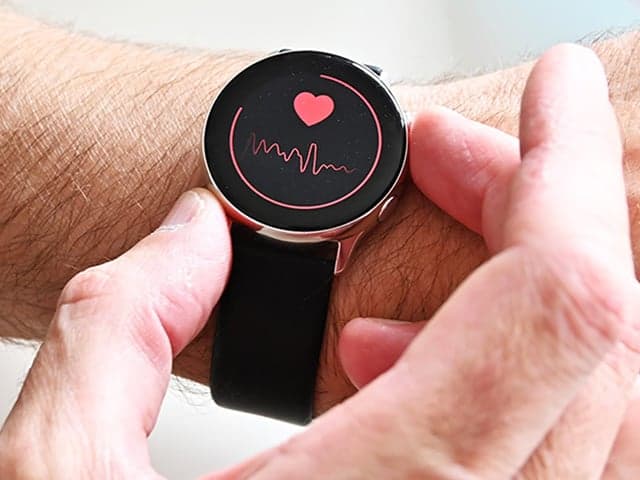
Clinical Validation Testing
Element delivers comprehensive clinical validation testing for medical devices and wearables, managing study design, recruitment, testing, and data analysis. Our complete solutions help overcome regulatory challenges and accelerate product development.
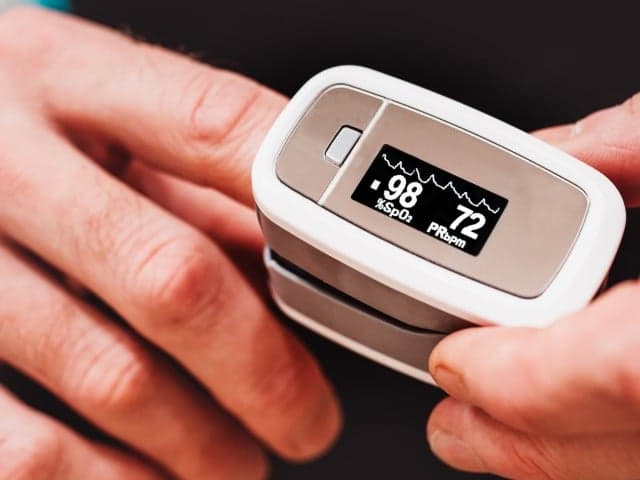
Pulse Oximeter Validation Testing
Element's pulse oximeter clinical validation service provides comprehensive human testing that delivers real-world, high-quality data to support regulatory submissions and significantly optimize device performance across diverse clinical settings with precision.

Wearable Device Testing
Accelerate your wearable device's market launch with Element's comprehensive testing services. Ensure regulatory compliance, validate performance, and verify durability—all with one trusted partner.