
RSS-102 Issue 6
RSS-102 Issue 6 is ISED Canada’s RF exposure standard for radio equipment in Canada, published 15 December 2023 and mandatory since 15 December 2024. This was no light amendment: exemption thresholds moved in both directions, wireless power transfer gained a dedicated section, and the Total Exposure Ratio was introduced for multi-transmitter products.
Any certification file still referencing Issue 5 is out of date, and the reassessment is the manufacturer’s job. This whitepaper by Element wireless expert Michael Derby sets out what changed, who is affected, and how to tell whether your product needs new testing or a documented reassessment.
RSS-102 Issue 6: What are manufacturers’ obligations after the transition period?
The transition period ran from 15 December 2023 to 15 December 2024. Since then, ISED has accepted applications only under Issue 6, and Canadian market surveillance is carried out against Issue 6.
Is your radio equipment assessed against RSS-102 Issue 6?
For any product certified to the latest RSS-102 Issue 6, the whitepaper helps you:
- Identify which of the five RF exposure assessment routes apply, based on frequency and how the device is used.
- Understand whether a multi-transmitter product now needs a combined Total Exposure Ratio assessment.
- Decide whether your reassessment closes out on paper or needs an accredited RF exposure lab.
- Check the user manual and installation instruction wording ISED expects to see.
Understanding the changes to RSS-102 Issue 6
What has changed and what are the timelines?
ISED published RSS-102 Issue 6 on 15 December 2023 with a 12-month transition. Gap analysis between RSS issues is usually straightforward. This one was not. The layout and structure of the whole document changed, and several technical assessment sections changed with it, so the work is closer to a fresh assessment than a comparison.
Useful terminology: NS, SAR, APD, IPD and FRL
Which assessment applies depends on frequency and how the device is used:
- Nerve Stimulation (NS) for equipment transmitting between 3 kHz and 10 MHz.
- Specific Absorption Rate (SAR) for equipment between 100 kHz and 6 GHz used within 20 cm of the body.
- Absorbed Power Density (APD) for equipment above 6 GHz used within 20 cm of the body.
- Incident Power Density (IPD) for equipment transmitting above 6 GHz.
- Field Reference Levels (FRL) for equipment used at more than 20 cm from the body, based on radiated fields. Earlier issues called this an RF exposure evaluation.
Most requirements hang on a test exemption threshold: the combination of output power, frequency, transmitter configuration and distance from the user that decides whether a lab test is needed.
Key changes in RSS-102 Issue 6
- Test exemption thresholds have moved both ways. A low-frequency device that needed an NS test under Issue 5 may now be exempt. Elsewhere, the requirement tightened, and a previously exempt device needs a test.
- SAR thresholds have dropped for 2.4 GHz Wi-Fi and Bluetooth, the most commonly certified equipment in Canada. A Bluetooth device transmitting around 5 dBm, between 3 mW and 4 mW, may have been exempt from SAR testing at certification and require it under Issue 6.
- Wireless power transfer (WPT) has its own section. WPT equipment was not addressed separately in Issue 5, so inductive charging designs need checking against the new provisions.
- The Total Exposure Ratio (TER) is new. Products with more than one transmitter that can transmit simultaneously need a combined assessment, for example a low-frequency RFID requiring NS alongside Wi-Fi or cellular requiring SAR. Issue 5 gave no clear method for combining exposures measured in different ways.
- Module documentation obligations have changed. How RF exposure warnings and safe user separation distances are stated in installation instructions has been revised, which flows into the integrator’s host product file.
The RSS-102 Series: Measurement procedures have changed since the publication
One point for anyone reassessing now rather than in 2024. ISED has broken the detailed methods out of RSS-102 into separate procedure documents, including RSS-102.SAR.MEAS, RSS-102.NS.MEAS and RSS-102.IPD.MEAS. In August 2025, it rescinded the legacy SPR-001 to SPR-004 procedures into that series and issued RSS-102.SAR.MEAS Issue 2, adding time-averaged SAR and time-averaged absorbed power density for 5925 to 7125 MHz WLAN. Check the current procedure document as well as RSS-102.
Consequences for products tested and certified to previous editions of RSS-102
Every manufacturer has to do something. You evaluate the product against Issue 6 and decide whether the work done at certification still holds.
Two outcomes follow:
- No new testing is needed, and the existing Issue 5 assessment is sufficient. You document that, with no need to visit a lab or contact a certification body.
- Additional testing is needed. The product goes to an accredited RF exposure lab, and a CB or FCB updates the ISED certification.
Either way, you need evidence the product meets Issue 6 to keep selling it in Canada, whenever it was first certified, and that applies equally to modules and finished equipment. Two things catch manufacturers out. Any permissive change, multiple listing or new model number will attract a request for Issue 6 evidence, and surveillance now assumes every device on the market has been correctly assessed.
Who Is Affected by RSS-102 Issue 6?
Manufacturers of radio transmitter equipment who market or sell into Canada, or who hold an ISED certification. Module vendors and the integrators who build those modules into host products are both in scope, and the obligation does not transfer.
RSS-102 Issue 6: Next Steps for Manufacturers
- Review the latest version of the certificate issued by your CB or FCB.
- If it references Issue 6 for every model you supply to Canada, you are current. Keep watching the other RSS on the certificate, including the issue of RSS-GEN that applied at certification.
- If it references Issue 5 or earlier for any model, that product needs reassessing.
- Establish what has changed. If the product was exempt and remains exempt, document that and align your user manual statements. If you already held NS or SAR data, confirm those results are still valid and record the conclusion. If it was exempt under Issue 5 but is not under Issue 6, book testing at a listed lab and contact a certification body to update the file.
RSS-102 Issue 6: Frequently Asked Questions
When did RSS-102 Issue 6 come into force?
RSS-102 Issue 6 was published on 15 December 2023 with a 12-month transition. Since 15 December 2024, ISED accepts certification applications only under Issue 6, and all radio equipment sold in Canada must comply with it.
What is the Total Exposure Ratio (TER) in RSS-102 Issue 6?
The Total Exposure Ratio is a combined RF exposure calculation for products with multiple transmitters that can operate simultaneously. Issue 6 requires the worst-case TER for nerve stimulation and for thermal effects to each stay at or below 1, which can pull previously separate assessments into a single evaluation.
If the RSS-102 Issue 6 reassessment shows no change to testing, do we still need to update the certificate?
No. If your reassessment shows the existing test data still meets Issue 6, you do not need to update the certificate. You update it only when new testing is required, for example when a technical requirement changed and the product had to be retested.
If nothing changes for my product with RSS-102 Issue 6, how do we prove we did the reassessment?
You hold the evidence on file rather than submitting it. By continuing to sell after 15 December 2024, you are declaring the product meets Issue 6, and ISED can ask for that evidence if you change components, critical software or the model number, rebrand the product, or let another party use your certification number.
RSS-102 Issue 6 Advisory, Testing and Certification Services from Element
Element supports manufacturers using radio technologies or modules, providing advisory, testing, and certification services.
We help in three ways on RSS-102 Issue 6:
- Our regulatory compliance advisory team can carry out the Issue 6 reassessment for you, for any manufacturer, whether or not we performed the original work.
- As an ISO/IEC 17025 accredited test lab listed with ISED for RF exposure, we run the RF exposure and wireless test programs from our labs in the USA, UK, EU and Korea.
- As an ISO/IEC 17065 accredited Foreign Certification Body listed with ISED, we can update the ISED certification itself where new RF exposure data changes the file.
If the same product needs FCC certification, RED testing for CE marking, or wider global market access, we can run Canada alongside those programs.
Reference:
Innovation, Science and Economic Development Canada (ISED), RSS-102, Issue 6, Radio Frequency (RF) Exposure Compliance of Radiocommunication Apparatus (All Frequency Bands), 15 December 2023. Available at ised-isde.canada.ca.
Conclusion
RSS-102 Issue 6 is a reminder that Canadian certification is not a one-time event. The standards behind an ISED certificate change, and keeping up with them is the manufacturer’s responsibility. The deadline has passed, but the work has not: the next permissive change, model addition or surveillance request will surface any product whose RF exposure evidence doesn’t comply with Issue 6.
Download the whitepaper below for the full detail on the assessment routes, the changed exemption thresholds and the Total Exposure Ratio requirement.
By Engaged Experts

Download the Whitepaper
ISED CANADA: RSS-102 ISSUE 6 STANDARD UPDATE
Related Services
ISED Certification for Canada
Get ISED certification faster with Element's end-to-end testing and certification services, documentation support, and FCB authorization for seamless Canadian market access.

Wireless Device Testing & Certification
Get your wireless devices to market faster with Element's accredited testing services. Expert guidance through compliance, certification and global approvals for all wireless technologies.
Radio Frequency (RF) Testing & Certification Services
Accelerate time-to-market with Element's end-to-end RF testing and certification services. Our expert engineers ensure your wireless devices meet global regulations, prevent interference issues, and perform optimally.
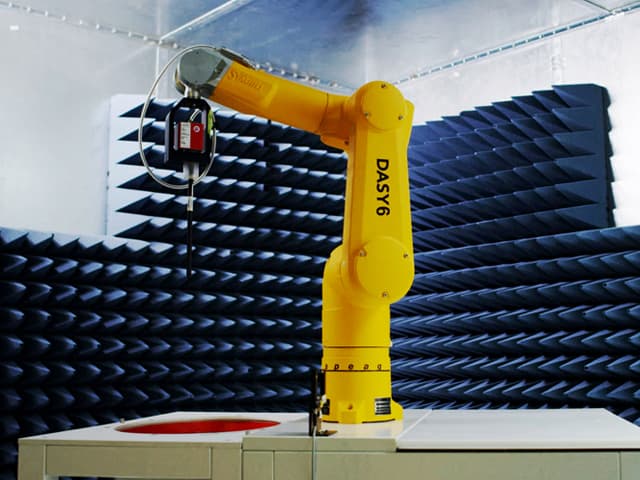
Specific Absorption Rate (SAR) Testing
Accelerate market entry with Element's Specific Absorption Rate (SAR) testing. Our advanced DASY6 technology ensures wireless devices meet RF exposure standards across US, EU, and Asian markets, while optimizing device performance.