Differential Scanning Calorimetry (DSC) Analysis Services
Need precise thermal analysis for your polymeric materials? Our efficient, standards-compliant Differential Scanning Calorimetry (DSC) Analysis Services provide accurate data on glass transition temperatures, melting points, and thermal properties. With fast turnaround times, expert technical support, and global lab access, we help streamline compliance and optimize material performance.

What is Differential Scanning Calorimetry (DSC) Analysis at Element?
DSC is a thermo-analytical technique that measures the energy required to heat materials to specific temperatures, compared against an inert reference. At Element, we provide highly precise DSC testing to detect glass transition temperatures, analyze thermal properties, and identify critical material transition points. Our testing supports industries such as polymers, automotive, aerospace, and electronics.
What can Element offer you for DSC Analysis?

Key tests offered
Key tests offered
Element performs DSC testing in laboratories across the US and Europe. Our polymer testing experts have years of experience across a variety of industries, and can help you overcome the unique challenges inherent with non-metallic materials. Tests we provide include:
- Glass transition temperature detection
- Melting temperature determination
- Thermal property analysis
- Endothermic and exothermic reaction identification
- Material transition point detection
Components and materials we test
Components and materials we test
We specialize in testing polymeric and non-metallic materials, providing comprehensive thermal analysis for manufacturing, electronics, automotive, and aerospace applications. Our expertise covers a wide range of material types and compositions, ensuring accurate results for your specific needs.
Methods and solutions offered
Methods and solutions offered
Our DSC testing utilizes precise temperature control and energy measurement techniques, comparing your material against inert references to detect thermal events. We provide detailed analysis of heat capacity changes, transition ranges, and deterioration points.
In DSC testing, a small sample of material is heated at a controlled rate. The energy required to heat the sample is compared to that of an inert reference material, both at the same temperature. If the sample requires more energy than the reference, it shows as an endothermic peak, indicating processes like melting, with the peak corresponding to the melting temperature. Conversely, if the sample requires less energy, an exothermic peak is observed. This can indicate a chemical reaction, such as curing, occurring within the sample.
Standards we test to and materials we test
American Society of Testing & Materials
- ASTM D3417, ASTM D3418, ASTM D3895, ASTM D4591, ASTM D7426, ASTM E1131, ASTM E1269, ASTM E1356, ASTM E1858, ASTM E2160, ASTM E2602, ASTM E793, ASTM E794, ASTM E831, ASTM F1514, ASTM F262
Deutsches Institut für Normung
- DIN 51007, DIN 75201
Institute for Interconnecting and Packaging Electronic Circuits
- IPC-TM-650
International Standards Organization
- ISO 11357, ISO 11358, ISO 11359
Various Customer Specifications
- SRM 25R-94, PA-06, PA-14, GM 9094P, MAP N215
- Polymeric materials
- Non-metallic materials
- Electronic packaging materials
- Composite materials
- Thermal interface materials
Your Challenges, Our Solutions

Complex Regulatory Compliance
Material Performance Under Stress
Uncertainty in Material Stability
Costly and Time-Consuming Testing
Why Choose Element

Global Reach, Local Support
Comprehensive Standards Coverage
Industry-Leading Innovation
Specialized Expertise
Frequently asked questions
What does an endotherm indicate in DSC testing?
An endotherm occurs when your sample requires more energy to heat compared to the reference material. The peak of an endotherm indicates the melting temperature of your material.
What does an exothermic peak indicate?
When your sample requires less energy to heat compared to the reference material, an exothermic peak appears. This typically indicates a chemical reaction, such as curing, is taking place.

Explore our global network of labs and find your nearest location
VIEW ALL LOCATIONSRelated services
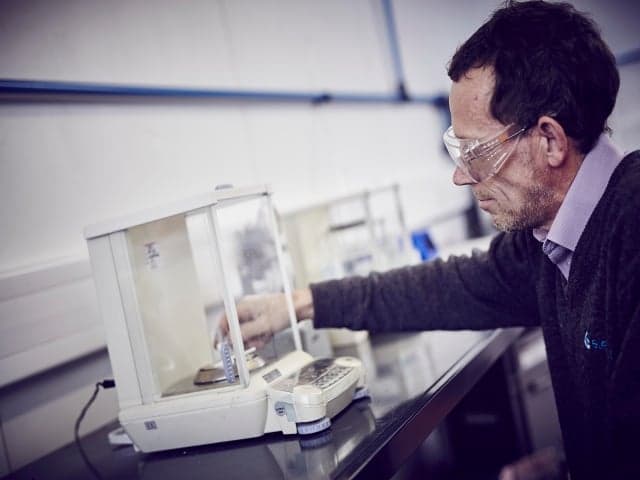
Polymer Testing & Characterization Services
Maximize your polymer material performance with Element's comprehensive testing services. Our expert analysis translates complex data into actionable insights across your entire product lifecycle.

Thermal Analysis Services
Element's thermal analysis services help identify material properties, anticipate changes, and reduce failure risks. Our experts provide accurate, reliable testing for polymers, composites, and advanced materials.
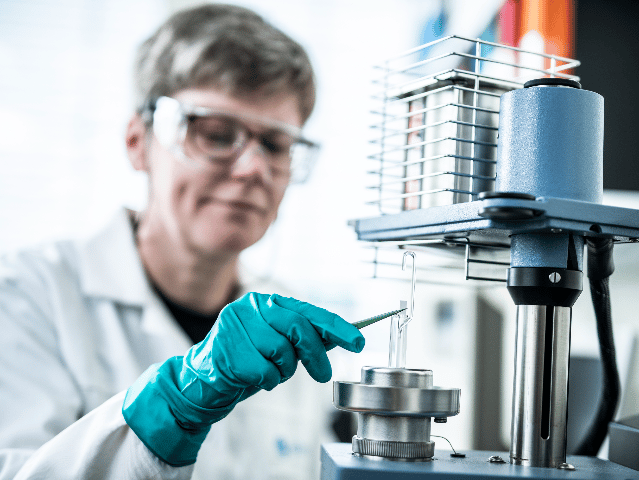
Thermomechanical Analysis (TMA)
Thermomechanical analysis (TMA) evaluates polymer thermal properties, including expansion and phase changes. Element provides precise data for R&D, quality control, and material classification.
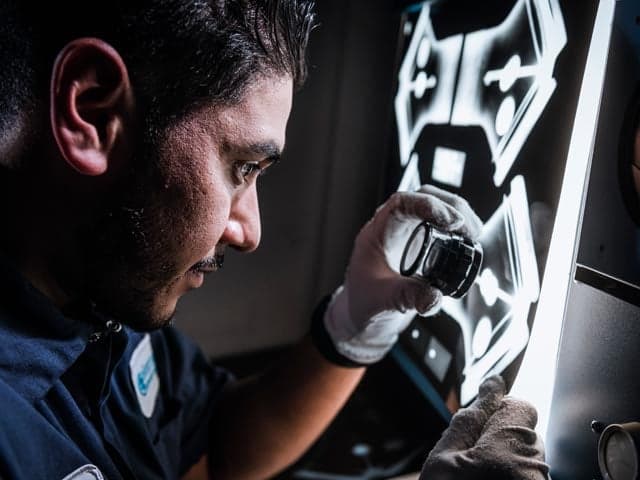
Radiographic Testing (RT) and Inspection Services
Element provides radiographic testing and inspection services to detect hidden defects in critical components. Our advanced NDT methods meet industry standards, ensuring compliance, efficiency, and reliable quality verification.

Dynamic Mechanical Analysis – DMA Analysis
Element offers DMA testing to analyse thermal and mechanical properties of non-metallic materials. We provide insights into stiffness, damping, and glass transition to enhance material performance.