

Lithium-Ion Battery Certification: A Guide to Global Compliance Standards

Lithium-ion battery certification spans multiple overlapping standards that interact differently depending on your target markets, product type, and battery format. This guide covers the major standards, how they relate to each other, and how to sequence them efficiently to avoid duplicate testing and late-stage delays.
The Major Lithium-Ion Battery Certification Standards
Not all lithium-ion battery certification standards serve the same purpose, and treating them as interchangeable is one of the most common ways manufacturers end up with gaps in their compliance programme. The standards are broadly split into two groups: product safety standards, which evaluate how a battery behaves under normal and abnormal operating conditions, and transportation standards, which determine whether a battery can be legally shipped. Understanding what each standard covers and how they interact is the starting point for building a certification strategy that does not require you to repeat work.
UL 1642: Cell-Level Safety for the U.S. Market
UL 1642 is a U.S. domestic standard that applies to lithium-based cells and multicell battery assemblies. It evaluates safety risks associated with electrical abuse, mechanical stress, and environmental exposure under both normal and abnormal operating conditions. Both primary and secondary chemistries are covered.
UL 1642 testing validates that battery cells can operate safely when integrated into larger battery-powered products. It is typically the foundation of any U.S. certification programme. For manufacturers pursuing UL 2054 at the pack level, UL 1642 cell-level data can often be carried forward, avoiding repeated testing of the same parameters.
UL 2054: Pack-Level Safety for Household and Commercial Products
UL 2054 applies to complete battery packs used in household, commercial, and consumer products. It covers both rechargeable and non-rechargeable battery systems and evaluates electrical, mechanical, and environmental safety at the pack level rather than the cell level.
A battery pack that has already achieved UL 1642 certification at the cell level can often use that existing test data to streamline the UL 2054 process. This is one of the most common efficiency gains available to manufacturers pursuing both certifications through the same laboratory.
IEC 62133-2: The International Safety Standard
IEC 62133-2 is the most widely recognised international safety standard for rechargeable lithium-ion cells and battery packs. It applies to portable sealed secondary cells and batteries with alkaline or non-acid electrolytes, covering consumer electronics, industrial equipment, and portable devices. While the test categories align broadly with the UL standards, IEC 62133-2 carries international market acceptance that UL 1642 and UL 2054 do not.
For manufacturers pursuing international distribution, lithium battery testing and certification programmes that include IEC 62133-2 qualification are typically necessary before products can enter major markets in Europe, Asia, and beyond.
UL 62133-2: The U.S. Adoption of IEC 62133-2
UL 62133-2 is the U.S. national adoption of IEC 62133-2. The technical testing requirements are closely aligned with the IEC version, but national deviations may apply depending on the product and target market.
When testing is handled through the same laboratory for both IEC 62133-2 and UL 62133-2, manufacturers can often use IEC test data to satisfy UL 62133-2 requirements, reducing duplication and shortening the overall certification timeline. This is one of the clearest arguments for consolidating certifications with a single testing partner rather than splitting them across multiple laboratories.
UN 38.3: Transportation Certification for Lithium Batteries
UN 38.3 governs the safe transportation of lithium-ion and sodium-ion batteries. It applies to both primary and rechargeable chemistries and is a prerequisite before batteries can be shipped internationally. Without UN 38.3 certification, batteries cannot legally move across borders, which makes it a gating requirement in any product launch that involves international supply chains or distribution.
The test programme simulates transportation-related conditions, including vibration, altitude change, thermal exposure, mechanical shock, and external short circuit, to verify that batteries remain stable during shipping and handling. UN 38.3 testing should be planned from the outset of the certification programme rather than treated as an afterthought once product-level certifications are complete.
Why National Deviations Can Disrupt a Certification Plan
Although IEC and other international standards aim to harmonise testing requirements across markets, individual countries frequently introduce regional deviations that modify the required scope of testing. These deviations reflect local regulatory interpretations, country-specific component requirements, language translation clarifications, and differences in safety risk thresholds.
Deviation clauses appear within standards as DV annotations. They are easy to miss if you are working from a high-level summary of the standard rather than the full technical document. Missing a deviation clause can mean arriving at the end of a certification programme and discovering that additional testing is required for a specific market, or that a component used in your product does not meet a country-specific specification that was not flagged earlier.
The practical implication is straightforward: national deviations need to be identified and accounted for at the planning stage, not after testing has begun. For products targeting multiple markets simultaneously, mapping the deviation requirements for each target region before finalising the test plan is an essential step.
Building an Efficient Lithium-Ion Battery Certification Strategy
The most common source of unnecessary cost and delay in battery certification is treating each standard as a separate workstream rather than planning how they interact. The following pathways reflect how manufacturers can sequence certifications to minimise duplication.
For manufacturers targeting international markets alongside the U.S.:
- Complete UN 38.3 transportation testing first, as this is a gating requirement for international shipping and is independent of the product safety standards.
- Run UL 1642 and IEC 62133-2 evaluations concurrently where possible, since the test categories overlap and a single laboratory can often run both programmes in parallel.
- Use IEC 62133-2 test data to support UL 62133-2 certification where required, avoiding repeated testing of the same parameters under two different standard designations.
For manufacturers requiring UL 2054 at the pack level:
- Obtain UL 1642 certification at the cell level first.
- Complete UL 2054 testing for the finished battery pack, using previously completed UL 1642 cell-level data where the standard permits reuse.
In both pathways, consolidating testing with a single accredited laboratory reduces documentation fragmentation, avoids repeated scheduling and setup costs, and gives you a single point of contact for regulatory queries. Element is an official member of the IECEE Certification Body scheme, which facilitates accredited testing for UL, UN, and IEC standards under one programme.
What Compliance Testing Does Not Cover
A certification mark tells you that a battery passed a defined set of tests on a specific date. It does not tell you how that battery will perform after two years in the field, repeated thermal cycling, connector wear, or vibration during transportation and handling. Many of the failure modes that lead to field recalls are not captured by standard compliance testing alone.
Manufacturers who want a more complete picture of long-term battery reliability use battery safety and abuse testing to evaluate how batteries respond to conditions that exceed normal operating parameters. These programmes apply mechanical, electrical, thermal, and environmental stressors deliberately, to identify failure modes before products reach consumers.
For electric vehicle and automotive battery applications, automotive battery testing services extend this further, evaluating batteries under the specific operational and regulatory requirements of the automotive sector, including standards such as UN 38.3, UL 2580, IEC 62133, and ECE R100.
Frequently Asked Questions
What is the difference between UL 1642 and IEC 62133-2?
UL 1642 is a U.S. domestic standard that applies at the cell level and is required for products entering the U.S. market. IEC 62133-2 is an international standard that applies to rechargeable cells and battery packs and is accepted across most major international markets. The test categories overlap significantly, but they serve different market access requirements. A battery certified to UL 1642 is not automatically compliant with IEC 62133-2, and vice versa.
Can IEC 62133-2 test data be used to satisfy UL 62133-2 requirements?
In many cases, yes. UL 62133-2 is the U.S. national adoption of IEC 62133-2, and the technical requirements are closely aligned. When both certifications are handled through the same laboratory, IEC 62133-2 test data can often be used to support UL 62133-2 without repeating the same tests. National deviations may require additional testing in specific cases, which is why working with a laboratory experienced in both standards is important.
When do national deviations require additional testing?
National deviations require additional testing when a country-specific modification to a standard affects a parameter that your product has not already been tested against. This can happen when a country specifies different component tolerances, test conditions, or evaluation criteria from the base standard. The only way to know whether a deviation applies to your product is to review the deviation clauses for each target market during the planning stage. Discovering a deviation requirement after testing has already been completed typically means additional lab time and scheduling delays.
What triggers a retesting requirement when a battery design changes?
Most certification standards require manufacturers to notify the certification body when a product change is made after certification has been granted. Whether the change requires retesting depends on whether it affects the safety characteristics that were evaluated during the original certification. Changes to cell chemistry, cell supplier, cell format, pack configuration, or protection circuit design typically trigger a formal change assessment and may require partial or full retesting. Minor changes to labelling, packaging, or non-safety-relevant components often do not.
Is UN 38.3 required for all lithium-ion batteries?
UN 38.3 is required for any lithium-ion or lithium metal battery that will be transported by air, sea, or road under international regulations. This covers the vast majority of commercial battery products. Some exemptions exist for small cells and batteries below specific watt-hour thresholds, but these exemptions are conditional and subject to packaging and labelling requirements. If your product will enter any international supply chain or be shipped to customers in other countries, UN 38.3 certification should be treated as a baseline requirement from the start of your compliance programme.
What is the advantage of using a laboratory that is a member of the IECEE CB scheme?
The IECEE CB scheme is a multilateral agreement that allows test reports from accredited laboratories to be used as the basis for certification in multiple member countries. Using a CB scheme member laboratory means that a single set of test data can support certification applications across different national certification bodies without requiring repeat testing in each country. For manufacturers targeting multiple markets simultaneously, this significantly reduces testing cost and time compared to running separate certification programmes through individual national laboratories.
Key Takeaways
Lithium-ion battery certification is not a single process. It is a set of overlapping standards that interact with each other depending on your target markets, your product type, and the chemistry and format of the battery you are certifying. The manufacturers who move through certification most efficiently are the ones who plan those interactions from the start, not after individual certifications have already been completed in isolation.
Of the factors that cause late-stage delays, national deviations are the most common and the most avoidable. Map them for each target market before testing begins, not after. UN 38.3 is a gating requirement for international shipping and needs to be planned as one from the start of the programme. And wherever IEC and UL certifications overlap, consolidating them through a single laboratory that participates in the IECEE CB scheme is the most direct way to avoid duplicate testing.
Work With Element
Element provides lithium battery testing and certification across UL, IEC, and UN standards, including UN 38.3 transportation testing, UL 1642, UL 2054, IEC 62133-2, and UL 62133-2. As an official member of the IECEE Certification Body scheme, Element can consolidate your domestic and international certification programmes under a single accredited laboratory, reducing duplication and simplifying documentation. To discuss your certification programme, contact Element’s battery testing team.
By Engaged Expert



Related Services
Lithium Battery Testing and Certification Services
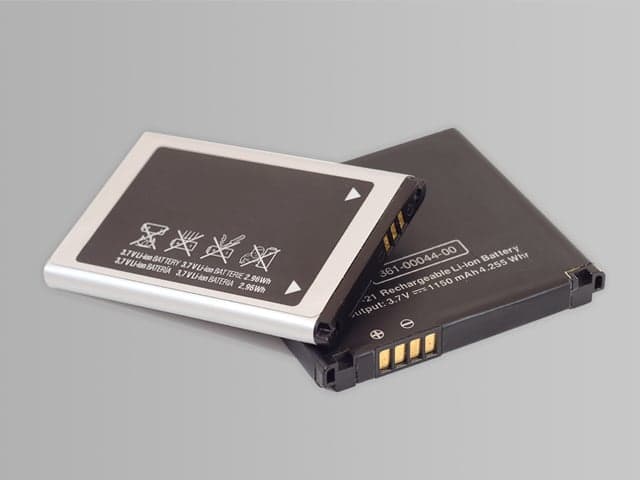
Ensure safety, performance, and regulatory compliance with comprehensive lithium battery testing. Element's advanced laboratories can test lithium metal and lithium-ion batteries for any application, from medical devices to electric vehicles.

Battery Safety and Abuse Testing
Element delivers advanced battery safety and abuse testing for various chemistries and formats, helping identify risks, support certification, and meet global standards across diverse industries and applications.

Automotive Battery Testing
Element provides expert automotive battery testing to meet global safety and compliance standards. We test Li-ion and Ni-MH batteries for durability, performance, and regulatory approval.