

How to Reduce MRO Downtime Through Smarter Special Processing Strategies
Understanding Aerospace MRO Repair vs Replacement
How Integrated Inspection and Special Processing Reduce AOG Downtime
Aircraft operators constantly face a critical maintenance decision: should a damaged component be repaired or replaced? The answer has significant implications for cost, turnaround time, and operational reliability. With supply chains under pressure and aircraft utilization increasing, many operators are reevaluating traditional replacement-first approaches.
This article explores how modern aerospace MRO strategies leverage integrated inspection, special processing, and certified workflows to repair high-value components safely and efficiently. It outlines when repair is the preferred option, how integrated processes reduce aircraft-on-ground (AOG) downtime, and what operators should evaluate when selecting an MRO partner.
When Should Aircraft Components Be Repaired Instead of Replaced?
The decision to repair rather than replace a component is typically driven by a combination of technical feasibility, cost, and operational urgency.
Repair is often the preferred option when:
- Replacement parts have long OEM lead times
- Components are high-value forgings or castings
- The part is part of an aging or legacy platform
- Approved repair data exists within OEM Component Maintenance Manuals (CMMs) or Structural Repair Manuals (SRMs)
- The repair can be completed faster than sourcing a new component
In modern aerospace operations, repair is increasingly seen not as a compromise, but as a strategic maintenance approach that allows operators to extend asset life while maintaining compliance with regulatory requirements.
When properly executed within approved specifications and certified workflows, repair can deliver the same level of airworthiness as replacement while dramatically improving turnaround time.
How Repair Strategies Reduce Aircraft AOG and Lead Times
Aircraft-on-ground (AOG) events represent one of the most costly disruptions in aviation operations. Every hour an aircraft is unavailable affects schedules, passenger operations, and revenue.
Integrated repair strategies reduce AOG exposure by streamlining the maintenance workflow. Instead of sending components to multiple vendors for inspection, processing, machining, and finishing, integrated MRO environments consolidate these steps into a single controlled process.
This approach provides several advantages:
- Faster inspection and damage assessment
- Reduced transportation and logistics delays
- Immediate access to required special processes
- Simplified documentation and certification
- Faster return-to-service timelines
For operators, the result is a more predictable repair cycle and fewer delays caused by coordination between separate suppliers.
Why Special Processing Matters for Aerospace MRO
Special processing plays a central role in aerospace component repair because it directly affects the structural integrity, durability, and regulatory acceptance of the repaired part.
Processes such as non-destructive testing, chemical processing, coatings, and bonding must be performed under tightly controlled conditions. These processes typically require Nadcap accreditation and strict adherence to aerospace standards.
In a fragmented workflow, each process may be performed by a different supplier. This increases the risk of:
- documentation inconsistencies
- reinspection requirements
- certification gaps
- delays in OEM approval
Integrated special processing reduces these risks by ensuring that each step of the repair workflow is executed within a single quality management system. This improves traceability, maintains process control, and ensures that the final component meets both regulatory and OEM acceptance criteria.
What Special Processes Are Used in Aerospace Component Repair?
Rather than viewing special processes as a list of services, it is helpful to understand them as the sequence of questions an MRO operator must answer during a repair workflow.
Step 1: Is the damage fully visible?
Coating Removal and Surface Preparation
Protective coatings often conceal fatigue cracks, corrosion, and surface damage. Controlled stripping processes remove these layers without altering the base material, allowing accurate inspection of the component.
Step 2: Are there surface cracks or fatigue damage?
Fluorescent Penetrant Inspection (FPI)
FPI detects surface-breaking defects that may not be visible to the naked eye. This inspection method is widely used across aluminum, titanium, and nickel alloys and is essential for detecting fatigue cracking before repair begins.
Step 3: Are there subsurface defects in ferromagnetic components?
Magnetic Particle Inspection (MPI)
MPI identifies surface and near-surface discontinuities in ferromagnetic materials. This process is commonly used on landing gear components, shafts, and structural hardware subjected to cyclic loading.
Step 4: Does the component require structural repair?
Adhesive Bonding and Structural Restoration
Bonding techniques are often used to restore composite structures or hybrid assemblies. Proper surface preparation, curing cycles, and process control are critical to restoring structural integrity.
Step 5: Have dimensions changed during service or repair?
Precision Machining and Dimensional Restoration
Machining operations restore the component to the dimensional tolerances required by OEM engineering drawings. This ensures proper fit and functionality when the part is returned to service.
Step 6: Is corrosion protection required?
Conversion Coatings and Surface Treatments
Conversion coatings protect aluminum and magnesium alloys from corrosion and serve as a base layer for subsequent finishing processes.
Step 7: Does the component require friction reduction or wear protection?
Dry Film Lubricants
Dry film coatings provide lubrication in environments where traditional lubricants cannot be used, such as high-temperature or contamination-sensitive systems.
Step 8: Is the component clean enough for reassembly?
Precision Cleaning and Contamination Control
Final cleaning processes ensure that hydraulic, fuel, and lubrication system components meet strict contamination limits before being returned to service.
What Certifications Are Required for Aerospace MRO Repairs?
Aerospace repair activities must meet strict regulatory requirements to ensure that repaired components remain airworthy and globally accepted.
Key certifications typically include:
- FAA Part 145 Repair Station approval
- EASA Part 145 approval
- AS9100 quality management systems
- ISO/IEC 17025 laboratory accreditation
- Nadcap accreditation for special processes
These certifications demonstrate that the repair provider operates within controlled procedures, validated inspection methods, and documented quality systems.
How Integrated Special Processing Improves OEM Acceptance
A repaired component must leave the MRO facility with a complete and traceable documentation package.
This data package typically includes:
- inspection records
- process certifications
- traceability documentation
- material certifications
- dimensional inspection reports
- airworthiness release forms (FAA 8130-3 or EASA Form 1)
When multiple vendors are involved, documentation gaps can occur between processing steps. Missing traceability or incomplete records may lead to OEM rejection or requests for additional verification.
Integrated workflows reduce this risk by maintaining continuous documentation across every repair stage. For MRO operators, this means the repaired component is far more likely to be accepted without additional inspection or rework.
MRO Decision Checklist: Is Your Repair Workflow Reducing Turntime or Creating Risk?
Operators can evaluate their current maintenance workflow by asking several key questions.
Inspection and assessment
- Are inspection capabilities available immediately when components arrive?
- Are inspectors qualified to the required aerospace standards?
Processing integration
- Are special processes performed within a single controlled quality system?
- Does the provider hold the required Nadcap accreditations?
Documentation control
- Is the repair data package complete and traceable?
- Will the component leave with the documentation required for OEM acceptance?
Operational efficiency
- How many vendors are involved in the repair process?
- How much time is spent transporting components between facilities?
If the repair workflow requires multiple vendors, repeated inspections, or additional documentation reviews, it may be increasing turnaround time rather than reducing it.
Conclusion
As aerospace fleets age and supply chains tighten, repair strategies are becoming a critical component of modern MRO operations. Repair is no longer simply a fallback option when replacement parts are unavailable. Instead, it is an increasingly strategic approach that helps operators reduce costs, extend component life, and maintain operational readiness.
Integrated inspection, special processing, and certified repair workflows allow MRO providers to execute repairs efficiently while maintaining strict regulatory compliance. By consolidating these capabilities within a single accredited environment, operators can reduce aircraft downtime, simplify documentation, and ensure repaired components meet OEM acceptance requirements.
For airlines and MRO organizations focused on reducing AOG exposure and improving maintenance efficiency, the ability to execute repairs within an integrated, certified workflow is becoming an essential advantage.
By Engaged Experts

Spencer Roy holds a B.S. in Chemistry and a career spanning over 14 years across multiple roles in Quality and Operations. Now serving as General Manager, he brings a strong technical foundation and deep operational insight, leading teams with a focus on compliance, performance, and customer trust in regulated aerospace environments.

Katie Legowski holds a B.S. in Business Administration and has 8 years of experience in the aerospace special processing industry, advancing through multiple roles in Business Development and now serving as Business Operations Manager. She leads operations across three sites in Enfield and Hartford, taking ownership of the customer journey while driving strategic business growth, long-term customer partnerships, and high-performing teams.
Related Services
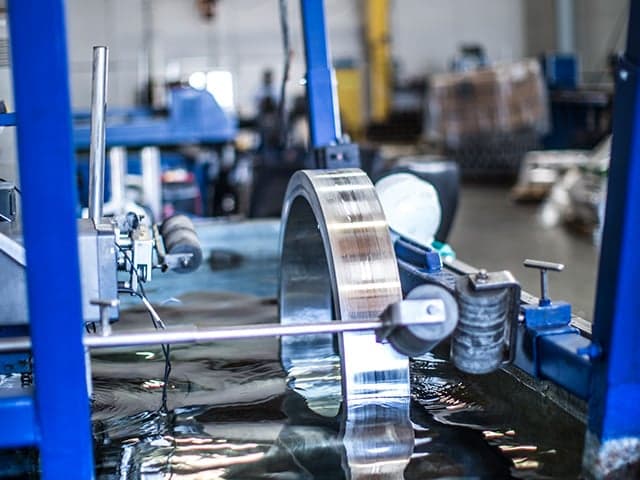
Aerospace Non-Destructive Testing (NDT)
Detect imperfections in aerospace materials without affecting their integrity with our comprehensive aerospace non-destructive NDT services. Our certified Level III experts use advanced testing methods.

Additive Manufacturing Testing
Element is at the forefront of additive manufacturing technology, providing critical testing services to clients in aerospace, transportation, medical devices, and beyond.
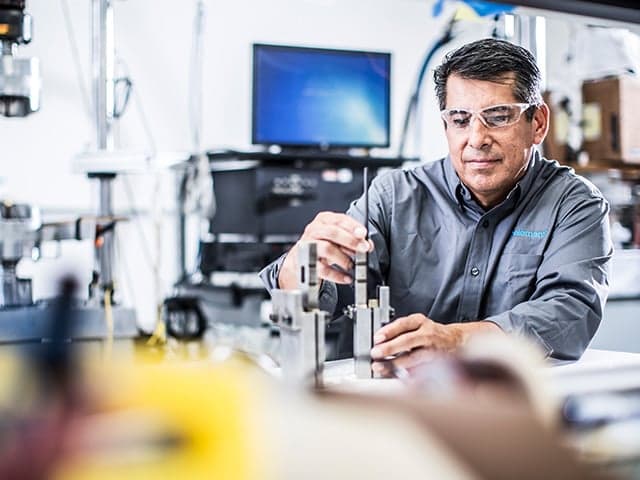
Aerospace Materials Testing
Our global network of 35 Nadcap accredited and aerospace supplier-approved aerospace materials testing laboratories provide a comprehensive range of materials testing services.