

What the UK PFAS Plan Means for Environmental Data Quality

Drawing on Element's analytical testing expertise supporting clients through PFAS risk management, we unpack what the UK PFAS Plan really prioritizes, and why organizations should be paying close attention to their data before regulation tightens.
When DEFRA (Department for Environment, Food and Rural Affairs) published its PFAS Plan, most of the attention went to what might happen next. Will there be a ban? When will new limits arrive? Which industries will be affected first?
They're reasonable questions, but after reading the document, they weren't the ones that stood out to us. What struck us was how often the Plan comes back to one theme: understanding.
Before the UK Government tightens regulation, introduces new restrictions or sets statutory limits, it wants a better picture of where PFAS are, how they behave and where the greatest risks sit. That probably won't surprise anyone working in the environmental sector.
For years, conversations around PFAS have centered on detection. Can we find them? How can we measure them? Which compounds can we identify? Those questions haven't disappeared, but they no longer capture the whole story.
The challenge now is collecting data reliably and making sense of it.
DEFRA’s PFAS Plan spends more time talking about evidence than enforcement
It's easy to assume the document is a roadmap to tougher regulation. But it's also surprisingly candid about what's still unknown.
The government openly acknowledges there are gaps in the evidence. It doesn't yet have a complete picture of where PFAS enter the environment, how contamination moves between water, soil and waste, or where future intervention will have the biggest impact. That explains why the need for accurate monitoring appears throughout the document.
The Plan commits to expanding environmental monitoring, identifying higher-risk locations and consulting on future drinking water standards. Those aren't isolated actions. They're all designed to answer the same question: where should attention be focused first?
That's a sensible place to start. Good regulation depends on good evidence.
What does that mean for organizations?
From our perspective, it changes the conversation slightly. A few years ago, most discussions focused on whether organizations should test for PFAS. Now they're increasingly about whether the information being collected will still be useful in five years' time. That's a different challenge altogether.
That’s why consistency matters. If PFAS analysis results change over time, organizations need to be confident they reflect what’s happening in the environment at their site, not changes in how samples are tested. Our methods are meticulous and follow current industry standards, giving organizations a solid basis for understanding how results change over time. Should advances in analytical techniques allow us to detect PFAS at even lower levels in the future, any changes would be introduced carefully and transparently so that historical data remains meaningful and will stand up to scrutiny in the years ahead.
Better data leads to better decisions
The PFAS Plan doesn't introduce immediate new obligations for every organization. However, it does make one thing clear; monitoring will become more important.
Whether future decisions relate to drinking water standards, environmental permits or remediation, they'll all depend on reliable data. That's why the quality of sampling matters. It's why laboratory capability matters.
And it's why understanding exactly what the data is telling us is just as important as producing a result. Those aren't new ideas, but they're becoming more prominent as the regulatory picture develops.
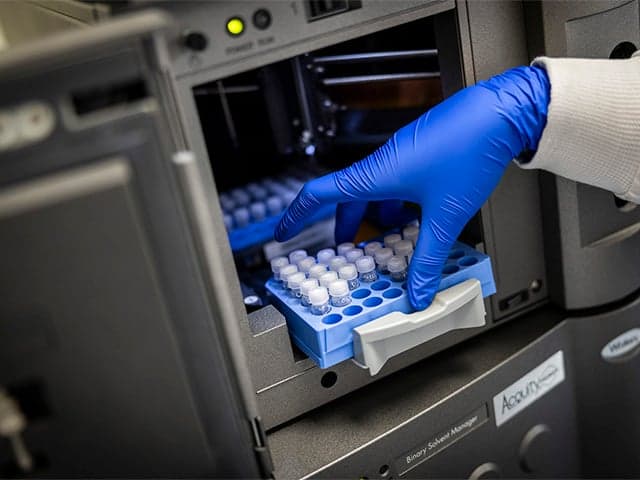
At our Deeside laboratory we initially screen samples using a high-level method to avoid contamination of the very high sensitivity instruments used for low-level analysis. Only once the laboratory is confident that concentrations fall within the required range for low-level analysis are samples concentrated and reanalyzed on a separate instrument for low-level reporting. Thus, in practice, samples requiring the lowest limits of detection may be analyzed twice before a result is issued.
While this approach protects our instruments, it also directly benefits our customers. A highly concentrated sample can leave residues in a sensitive instrument that carry over into subsequent analyses, potentially producing false elevated results. By keeping high-concentration samples away from our low-level instruments, we ensure that every result reflects only what is in a sample. Screening also helps us calculate and prepare appropriately diluted samples for analysis within the instrument’s calibrated range, giving accurate and reliable results. This reduces the likelihood of repeat analyses, requests for resampling, and it minimizes unplanned instrument downtime, helping us deliver consistent turnaround times. Most importantly, this process reinforces confidence in the data, particularly when results are close to regulatory limits.
This is the start, not the finish
The PFAS Plan leaves plenty unresolved. Consultations are still to come, and standards will almost certainly change as more evidence becomes available.
That's exactly what the document sets out to achieve. Rather than trying to answer every question today, it creates a framework for answering them over the coming years.
For organizations already managing PFAS, that's probably the biggest takeaway. The conversation is moving away from simply asking "Is PFAS present?"
The more useful question has become “What is the data telling us about the way forward?”
Understand what the PFAS Plan means for your organization
As PFAS regulation continues to evolve, manufacturers will need reliable data and trusted technical expertise to make informed decisions.
Element supports a range of clients engaged in managing PFAS risk with world leading analytical technology. Speak to our experts to discuss your requirements.
Conclusion: What do you need to know about the PFAS plan?
- Regulation is gathering pace: The UK has published its first national PFAS strategy, signaling a more coordinated approach to managing PFAS risks.
- Monitoring will increase: The Government plans include expanded monitoring of PFAS in water, soil and the wider environment.
- Sources are under increasing scrutiny: The plan includes sections on better understanding the sources of PFAS and how to address pathways for PFAS entering the environment.
- Businesses should prepare now: Future regulation is expected to tighten, making it important to understand where PFAS exist in your operations and how you may be contributing to environmental contamination.
- Early action brings advantages: Organizations that assess PFAS risks now will be better prepared as regulation continues to evolve.
Element offers end-to-end PFAS testing support. From accredited on-site sampling managed from our Stockport office and laboratory analysis at our Deeside facility, to cutting-edge real-time monitoring solutions. Speak with Greg Adamson, Marie Armstrong, Jenny Davies or Mark Elliott to learn more about PFAS testing, or here to discover Element and further Element resources.
By Engaged Expert


Related Services

PFAS Testing Services
Element's ISO/IEC 17025-accredited PFAS testing delivers precise detection down to parts per trillion. With advanced instrumentation, dedicated laboratories, and expertise in regulatory compliance, we provide fast, reliable results across water, soil, and products. Our comprehensive solutions help you meet complex regulations while safeguarding human health and the environment.

Water Testing & Analysis Laboratory Services
Element’s accredited water testing provides fast reliable results, and contaminant detection to support compliance, risk mitigation, and all water types. Learn More.
Wastewater Testing Services
Element's state-of-the-art wastewater testing laboratories analyze your wastewater samples, deliver accurate results and provide the guidance you need to take the next steps.