

What Is SIR Testing? How to Detect and Prevent PCB Electrochemical Failures
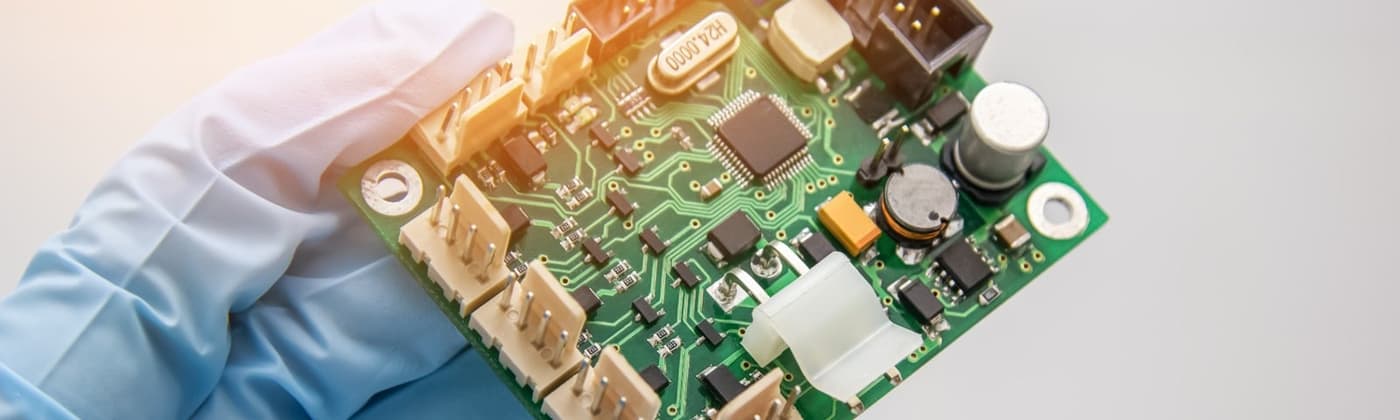
Surface Insulation Resistance (SIR) testing helps engineers evaluate PCB reliability under real-world environmental stress. This article explains how SIR testing identifies electrochemical risks like ECM and CAF, when to use it, and how to interpret results to improve long-term product performance.
What is Surface Insulation Resistance (SIR) testing?
Surface Insulation Resistance (SIR) testing is a reliability assessment method used to evaluate how printed circuit boards (PCBs) perform under elevated temperature, humidity, and electrical bias conditions.
As PCB designs continue to shrink and increase in complexity, the risk of electrochemical degradation rises. Residual contaminants, such as flux residues or ionic particles, can trigger corrosion and electrochemical migration (ECM), reducing insulation resistance between conductors.
SIR testing simulates these environmental conditions to determine whether failure mechanisms will develop over time. The result is actionable insight into how materials, design decisions, and manufacturing processes impact long-term reliability.
Why is PCB reliability testing becoming more important?
Modern electronics are pushing physical and material limits, introducing new reliability risks. Key trends include:
- Reduced conductor spacing
- Increased layer counts
- Advanced materials and substrates
- Miniaturized components
While these innovations improve performance, they also increase susceptibility to moisture ingress and contamination-related failures.
SIR and CAF testing help engineers:
- Validate cleaning and soldering processes
- Identify ionic contamination risks
- Confirm material compatibility in multilayer boards
- Detect early-stage electrochemical failure mechanisms
- Support supplier qualification and process changes
These tests are particularly valuable during:
- New Product Introduction (NPI)
- Process optimization or changes
- Supplier transitions
- Root cause investigations
Where is SIR and CAF testing most critical?
SIR and CAF testing are essential in high-reliability industries where failure is not an option:
- Aerospace and defense: avionics, mission-critical systems
- Automotive and EV: ADAS, battery systems, power electronics
- Industrial electronics: automation, sensors, control systems
- Medical devices: implantables, diagnostic equipment
- Data centers and AI systems: high-density computing hardware
In these environments, failures can lead to safety risks, downtime, or regulatory issues.
What failure mechanisms does SIR testing detect?
Electrochemical Migration (ECM)
- Driven by moisture and ionic contamination
- Causes dendritic growth between conductors
- Leads to intermittent or permanent short circuits
Conductive Anodic Filament (CAF)
- Forms within PCB laminate structures
- Creates conductive pathways between vias
- Often results in catastrophic internal failures
These failure modes are typically invisible during visual inspection but become apparent under environmental stress conditions.
How do you interpret SIR test results?
SIR testing measures insulation resistance over time under electrical bias.
Typical indicators of acceptable performance include:
- Resistance values ≥ 10⁸–10⁹ ohms
- Stable or increasing resistance trends
- No sudden drops in resistance
Warning signs include:
- Gradual resistance degradation
- Intermittent fluctuations
- Sudden drops indicating potential shorting
CAF testing complements SIR by focusing on internal failures between vias, often confirmed through microsection analysis.
When should you use SIR vs CAF testing?
|
Scenario |
Recommended Test |
|
Surface contamination risk |
SIR |
|
Flux residue or cleaning validation |
SIR |
|
Multilayer PCB reliability concerns |
CAF |
|
Via-to-via failure risk |
CAF |
|
Early-stage design validation |
SIR + CAF |
|
Root cause of internal shorts |
CAF |
What results should trigger further investigation?
Engineers should escalate analysis when they observe:
- Resistance dropping below threshold values
- Non-linear or unstable resistance trends
- Variability between test samples
- Early-life failures under mild conditions
Follow-up actions may include:
- Microsection analysis
- Ionic contamination testing
- Process audits
- Material compatibility review
How should you evaluate a lab’s SIR testing capability?
When selecting a testing partner, focus on capability rather than specific equipment branding.
Key considerations include:
- Compliance with IPC standards (e.g., IPC-TM-650)
- Ability to simulate a range of temperature and humidity conditions
- High-channel testing capacity for statistical relevance
- Continuous monitoring and data logging
- Experience interpreting long-term degradation trends
A robust setup should enable repeatable, controlled testing that reflects real-world conditions.
Surface Insulation Resistance testing is a critical tool for identifying hidden reliability risks in modern PCBs. As electronic systems become more compact and complex, susceptibility to electrochemical failure increases.
Understanding when to apply SIR versus CAF testing, how to interpret results, and what signals require further investigation enables engineers to make better design and process decisions.
To continue exploring this topic, review Element’s related services:
By Engaged Expert

Related Services
Printed Circuit Board (PCB) Testing
Looking for reliable printed circuit board testing? Element ensures PCB and assembly quality with advanced HATS2â„¢, counterfeit detection, and compliance. Learn More.
PCB Cleanliness & Contamination Testing
Ensure product reliability with Element's PCB Cleanliness & Contamination Testing. Our FTIR, IC, ROSE, and SEM/EDS analyses identify contaminants before they cause failures. Fast results from North America's PCB experts.
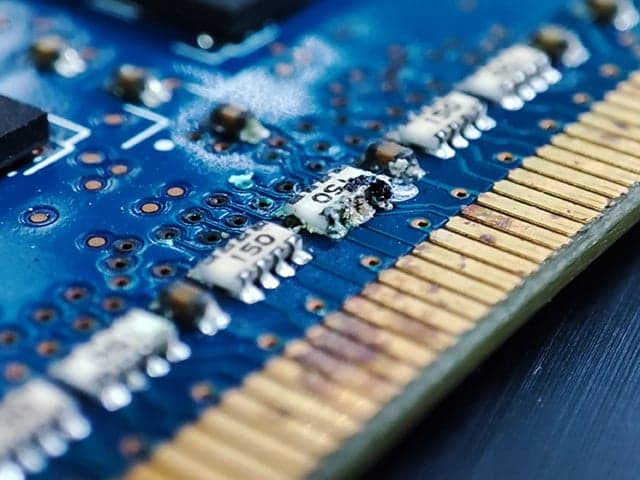
Printed Circuit Board (PCB) Failure Analysis
Understand and rectify the root causes of PCB failure with industry-leading PCB failure analysis from the testing experts at Element. Optimize your PCB designs while managing costs. Learn More.