

UN 38.3 and Beyond: Managing Battery Safety Risk in Logistics and Storage
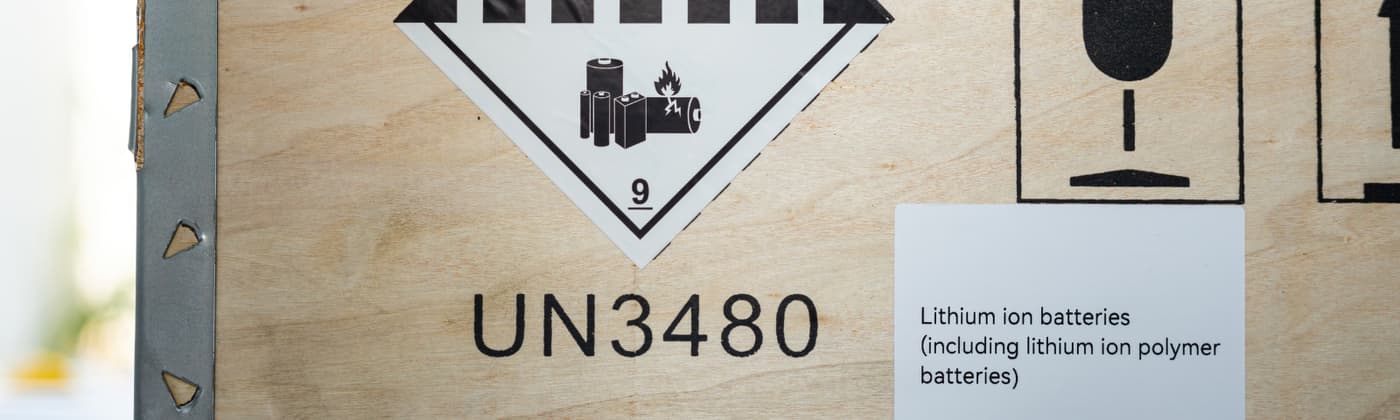
UN 38.3 proves a battery design survives transport testing, not how each unit is handled afterwards. Emily Klein, Element's Lead Failure Analysis Engineer, examines why incidents persist despite compliance, and finds the causes consistent: state of charge, packaging, documentation, and who is trained to spot a problem.
Download the full whitepaper below.
Executive Summary
This whitepaper examines downstream battery risk; the hazards arising once a cell, battery, pack, or module has left the manufacturer. Written for engineers, compliance managers, and safety stakeholders across the supply chain. The key findings are:
- Compliance is a baseline, not a guarantee. UN 38.3 is a design-qualification test, not a control on how an individual shipment is handled
- The FAA has recorded 626 verified smoke, fire, or extreme heat incidents involving lithium batteries between 2006 and 2025, with 2023 and 2024 the peak years
- Incidents are not confined to aircraft cargo holds — they occur on highways, in recycling plants, in warehouses, and in consumer hands
- State of charge (SoC) is the most frequently missed control. Shipping above 30% SoC materially raises the likelihood of a thermal event, and it is routinely overlooked
- Small-scale failures carry as much diagnostic value as large cargo fires, and sub-catastrophic degradation deserves the same seriousness
Why downstream battery risks matter
What counts as a downstream risk
A downstream risk is any hazard arising after a battery leaves the manufacturer. Before shipment, batteries go through extensive testing from early development to final qualification, and regulatory tests set baseline requirements ensuring every cell meets minimum safety criteria.
What those tests cannot address is everything that happens next. Downstream risk spans logistics and shipping, consumer use, and recycling and disposal at end of life. Each stage introduces its own conditions — mechanical stress, improper charging, environmental exposure, unsafe handling — and any can trigger an incident. As deployment scales, incidents become statistically inevitable even where standards are met.
Why training and process discipline are the weak point
Established tests exist to make battery transport safe, but their effectiveness depends on how the surrounding guidelines are applied. Logistics teams are commonly trained on general awareness, classification, packaging, labeling and documentation. That training leans heavily on personnel following guidelines correctly, and assumes prior product testing guarantees safe transport. In practice, guidelines are applied inconsistently, and logistics teams often lack the specialized battery expertise to recognize a warning sign such as swelling. For the underlying failure mechanisms, see Element's article on lithium-ion battery safety from cell chemistry to failure prevention.
“Every one of those tests happens before the battery leaves us. UN 38.3 proves a design can survive normal transport conditions — it does not follow the individual unit into a warehouse with shared racking, or onto a truck in August. Once a pack has left the manufacturer, safety stops being a test result and becomes a handling problem.”
— Emily Klein, Lead Failure Analysis Engineer, Element
What the incident data shows
The FAA tracks reported events involving smoke, fire or extreme heat. The dataset is not comprehensive, but it shows how often failures occur and in which product types:
- 626 verified smoke, fire, or extreme heat incidents between 2006 and 2025
- Of those, 469 on passenger aircraft and 131 on cargo flights
- Peak years were 2023, with 89 incidents, and 2024, with 77 recorded year to date
Aviation is simply the best-instrumented environment, not the only one. Recent cases include a truck carrying lithium batteries closing freeway lanes in California, a fire at a critical mineral recovery facility that triggered a shelter-in-place order, and two separate laptop fires, one starting while the device was being unpacked. In this whitepaper, Emily sets out each case, with a worked analysis of what the Cambridgeshire fire implies about the state of charge that unit shipped at. Three factors drive the trend: more batteries in circulation, limited education on handling, and supply chains that introduce inexperienced suppliers and, in some cases, deliberate bad actors.
What UN 38.3 actually requires
The eight tests: T1 to T8
UN 38.3 originates in the UN Manual of Tests and Criteria, Part III, sub-section 38.3, and is referenced by transport rules worldwide. Which of its eight tests apply depends on whether the article is a cell or a battery, and whether it is rechargeable:
|
Test |
What it simulates |
Applies to |
|
T1 |
Altitude simulation — low-pressure exposure representing unpressurised cargo |
Cells and batteries |
|
T2 |
Thermal test — rapid, repeated high and low temperature cycling |
Cells and batteries |
|
T3 |
Vibration — simulating transport vibration across a frequency sweep |
Cells and batteries |
|
T4 |
Shock — representing impacts during handling |
Cells and batteries |
|
T5 |
External short circuit at elevated temperature |
Cells and batteries |
|
T6 |
Impact or crush — internal short circuit induced mechanically |
Cells only |
|
T7 |
Overcharge — charging beyond the design limit |
Rechargeable batteries only |
|
T8 |
Forced discharge |
Primary and rechargeable cells |
T1 through T5 run in sequence on the same samples, so a design must survive the cumulative effect, not each condition in isolation.
How UN 38.3 becomes legally binding
UN 38.3 is a test procedure, not a law. It acquires legal force by being incorporated by reference into transport regulations. In the United States, the Hazardous Materials Regulations apply the moment a battery is offered for transport: under 49 CFR 173.185, every lithium cell or battery must be of a type proven to meet UN 38.3, and a test summary must be available. That sits alongside the HMR packaging, marking, labeling and documentation provisions, and for air shipments the ICAO and IATA rules including the 30% state-of-charge limit for standalone lithium-ion by air.
Outside the US, the same type testing is required through ADR for road, RID for rail, IMDG for sea, and ICAO or IATA for air. The EU goes further: Regulation (EU) 2023/1542 adds lifecycle obligations covering labeling, documentation and traceability that reach beyond transport compliance.
PHMSA Test Summary requirements
PHMSA requires manufacturers and distributors to publish a Test Summary for every lithium cell and battery, except button cells installed in equipment. No form is prescribed, but every required element must be present:
- Manufacturer and test laboratory names with full contact details, so any downstream shipper can verify compliance independently
- A unique report identifier and date of issue, linking the summary to its underlying test data
- The cell or battery's physical attributes, including mass, capacity, and chemistry
- A description of the tests conducted and their outcomes, with the Manual of Tests and Criteria revision applied
- Sign-off by a responsible individual, attesting to the summary's accuracy and completeness
PHMSA is what turns an international standard into a domestic legal requirement. You can legally build lithium cells for your own use, but the moment you ship them — even across town — PHMSA rules, and therefore UN 38.3, apply.
Where batteries are most at risk in transit and storage
The conditions that turn a compliant battery into an incident cluster in three places. Note the overlap with UN 38.3's own T3 and T4, the difference is that the standard applies them once, to a qualification sample, under controlled conditions.
- In transit: vibration and shock from rough roads or air turbulence, mechanical damage, exposure to temperature and humidity, undeclared batteries in mixed-cargo shipments, and charged batteries being inherently more prone to thermal runaway.
- In storage: inadequate spacing, shared racking, high ambient temperatures, and lack of surveillance.
- In labeling and documentation: missing UN numbers, UN3480 for lithium-ion alone, UN3481 in or with equipment, UN3090 for lithium metal alone, UN3091 in or with equipment; absent Class 9 and cargo-aircraft-only labels; no Test Summary on request; reused or damaged packaging obscuring markings.
Emily’s recommended best practices for battery logistics and storage
Risk remains throughout logistics, storage, recycling and handling even after cells pass regulatory testing. Experience from Element’s battery testing labs have proven these five measures most effective, and depend as much on process discipline as on technical controls.
- Verify state of charge. Confirm all units are below 30% SoC before shipment or storage. Above that threshold, cells cannot travel on passenger aircraft, though they may move by cargo aircraft with a full Class 9 declaration and more robust packaging.
- Confirm regulatory compliance. Required testing must be complete, with documentation and labeling readily accessible. This gets harder with smaller suppliers and during qualification, where low-quantity purchases often arrive without full documentation.
- Segregate by condition and chemistry. Full segregation is difficult at scale, but consistent separation by chemistry, age, and condition measurably reduces risk and improves traceability.
- Audit your own shipments. Anonymously purchasing your own product reveals what condition it actually arrives in. This has uncovered mechanical defects and units shipped above the 30% threshold, and pinpoints which process step failed.
- Invest in training and stop-work authority. Training should reach warehouse staff, transport teams, technicians and quality personnel alike. Element operates a stop-work authority policy empowering anyone on site to pause operations when a safety concern arises.
References and Supporting Documents
- UN Manual of Tests and Criteria, Part III, sub-section 38.3 — lithium metal and lithium-ion battery transport testing (T1–T8).
- 49 CFR 173.185 — Hazardous Materials Regulations, lithium cell and battery transport requirements (PHMSA).
- ICAO Technical Instructions and IATA Dangerous Goods Regulations — including the 30% state-of-charge limit for standalone lithium-ion by air.
- Regulation (EU) 2023/1542 — the EU Batteries Regulation, lifecycle labeling, documentation and traceability obligations.
- ADR (road), RID (rail), and IMDG (sea) — modal transport regimes requiring UN 38.3 type testing.
- Federal Aviation Administration — Lithium Battery Incident Data, verified smoke, fire and extreme heat events, 2006–2025.
Why download this whitepaper?
- A practitioner's account of downstream battery risk from an engineer who receives and inspects client samples every week.
- The full set of 2024 and 2025 incident cases, with a worked analysis of what one laptop fire implies about its shipped state of charge.
- The complete best-practice set with Element's own operational context, plus the cost and consequence of non-compliance.
Download today to read more about:
- Why downstream battery risks matter, and where training and guidelines break down in practice.
- Real-world incidents across highways, recovery facilities, consumer devices and aviation.
- FAA lithium battery incident data and what the reporting does and does not capture.
- What the incidents teach — including the converging conditions that turn a compliant cell into a hazard.
- Potential hazards in transit, in storage, and in labeling and documentation.
- Regulatory compliance: UN 38.3, ICAO, PHMSA and the Test Summary.
- Cost and consequence of non-compliance, from carrier rejections to reputational damage.
- Best practices and summary, with Element's stop-work authority policy explained.
What this means for your supply chain
Three things carry across the whole paper.
- First, compliance and safety are not the same measurement. UN 38.3 qualifies a design, while incidents happen to individual units in specific conditions.
- Second, the controls that fail most often are procedural rather than technical: state of charge, documentation, segregation, and whether anyone in the chain is equipped to notice a swollen cell.
- Third, small failures are worth as much attention as large ones, because a package-level event and a cargo fire teach the same lessons about failure modes at very different cost.
Element's battery testing laboratories deliver UN 38.3 testing and Test Summary documentation through our lithium battery testing and certification service, alongside battery safety and abuse testing and battery failure analysis where a unit has already failed in the field.
Learn more about Element here.
For the full analysis, including every incident case, the cost and consequence breakdown, and the complete best-practice detail, download the whitepaper below.
If your concern is transport vibration and thermal exposure as a durability problem rather than a compliance one, Element's whitepaper on combined temperature-vibration testing covers why those stresses behave differently when they act together.
Download the full whitepaper as a PDF, to read offline or share with your team.
Frequently Asked Questions?
What are the eight UN 38.3 tests?
T1 altitude simulation, T2 thermal cycling, T3 vibration, T4 shock, T5 external short circuit, T6 impact or crush, T7 overcharge, and T8 forced discharge. T1 to T5 are performed in sequence on the same samples. T6 applies to cells only, T7 to rechargeable batteries only, and T8 to primary and rechargeable cells.
Does passing UN 38.3 mean a battery is safe to ship?
It means the design has been proven to withstand normal transport conditions, which is a legal prerequisite for shipping. It does not control how an individual unit is handled, what state of charge it leaves at, how it is packaged, or how it is stored in transit. Incidents continue to occur in fully compliant supply chains for exactly those reasons.
What state of charge should lithium batteries be shipped at?
Below 30% state of charge for shipment or storage. The ICAO and IATA rules impose a 30% limit for standalone lithium-ion cells and batteries carried by air. Units above that threshold cannot travel on passenger aircraft, but may move by cargo aircraft with a full Class 9 dangerous goods declaration and more robust packaging.
What has to be in a PHMSA Test Summary?
Manufacturer and test laboratory names with full contact details, a unique report identifier and date of issue, the cell or battery's mass, capacity and chemistry, a description of the tests conducted and their outcomes, and sign-off from a responsible individual attesting to accuracy and completeness. No set format is prescribed, but every required element must be present, and the summary must be made available on request.
Which UN numbers apply to lithium battery shipments?
UN3480 for lithium-ion batteries shipped on their own, UN3481 for lithium-ion contained in or packed with equipment, UN3090 for lithium metal batteries shipped alone, and UN3091 for lithium metal in or packed with equipment. Missing or obscured UN numbers are among the most common documentation failures seen in practice.
By Engaged Expert

Related Industries
Download
Full Whitepaper

Related Services
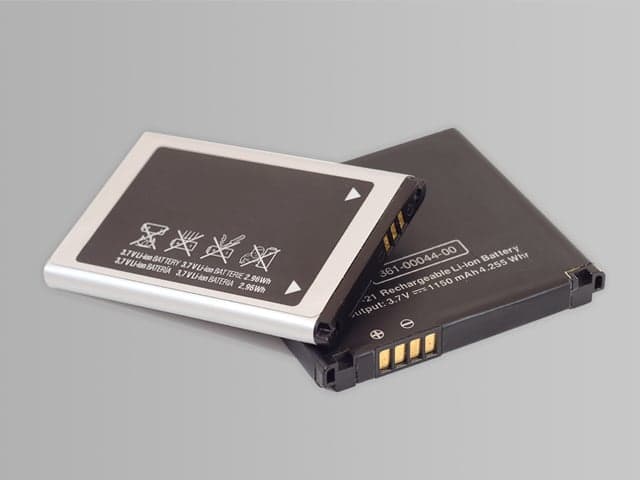
Lithium Battery Testing and Certification Services
Ensure safety, performance, and regulatory compliance with comprehensive lithium battery testing. Element's advanced laboratories can test lithium metal and lithium-ion batteries for any application, from medical devices to electric vehicles.
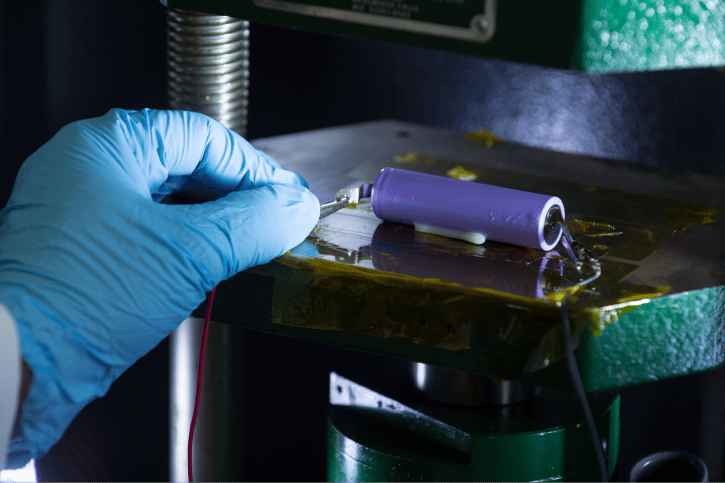
Battery Safety and Abuse Testing
Element delivers advanced battery safety and abuse testing for various chemistries and formats, helping identify risks, support certification, and meet global standards across diverse industries and applications.

Battery Failure Analysis
Element's comprehensive cell and battery failure analysis identifies failure modes and the root cause of product failure, providing the insights you need to design superior products.