

Lithium-Ion Battery Safety: From Cell Chemistry to Failure Prevention

As energy density has increased across each new generation of lithium-ion chemistry, so has the complexity of the failure modes. Lithium-ion batteries now power electric vehicles, energy storage systems, medical devices, and consumer electronics, and in each of those applications, a failure is not just a product problem. Understanding what is inside a cell, and how each component contributes to or undermines safety, is the foundation of any meaningful battery safety program.
What Is Inside a Lithium-Ion Cell?
Most battery failures originate inside the cell, not at the pack or system level. The four components that determine how a cell behaves under stress are the anode, cathode, separator, and electrolyte. Understanding what each one does under normal conditions makes it easier to understand what goes wrong when they do not.
Anode: Lithium plating is one of the most common precursors to an internal short circuit, and it starts at the anode. In graphite anodes, lithium ions intercalate into the electrode structure during charging. When charging is too fast, the temperature is too low, or the anode coating is uneven, lithium deposits on the surface rather than intercalating cleanly. Those deposits form dendrites, metallic filaments that grow across the cell and can eventually pierce the separator. That puncture is an internal short circuit waiting to happen.
Cathode: The cathode chemistry sets the ceiling on both energy density and thermal stability, and the two do not move in the same direction. NMC and NCA cathodes deliver high energy density but decompose at relatively low temperatures, releasing oxygen that accelerates combustion during a failure event. LFP cathodes are less energy-dense but structurally more stable under heat, releasing significantly less oxygen when they fail. The cathode is where the chemistry choice becomes a safety decision.
Separator: A separator failure is the most direct path to thermal runaway. This thin porous membrane is the only physical barrier between the anode and cathode. It allows lithium ions through during normal operation but must hold its structure under heat, mechanical stress, and manufacturing variation. When it does not, the electrodes make contact, current flows through an unintended path, and the heat generated can exceed the cell's ability to dissipate it within milliseconds.
Electrolyte: The liquid organic electrolyte in most commercial cells is flammable. That fact alone shapes how thermal runaway events escalate from a single cell failure into a fire. The carbonate solvents used as the carrier medium ignite when exposed to the heat and oxygen released during cathode decomposition. Solid-state batteries replace this liquid with a solid ionic conductor, removing the primary ignition source, but introduce their own interface and manufacturing challenges that are still being resolved at commercial scale.
Battery Management System: A BMS does not make a poorly designed cell safe. What it does is enforce the operating boundaries within which a cell can function without exceeding its thermal or electrical limits. It monitors voltage, current, and temperature in real time, balances cells within a pack, and triggers fault conditions before an overcharge or thermal excursion reaches the point of no return. When a BMS is poorly calibrated or absent, the cell's safety depends entirely on its own chemistry and construction.
To understand how these components are assembled from cell through module to pack, see EV Battery Testing from Cell to Module to Pack.
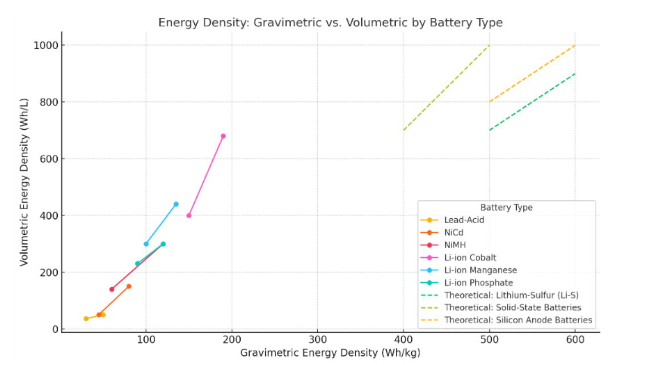
How Energy Density Affects Lithium-Ion Battery Safety Risk
Each generation of battery chemistry has pushed energy density higher. That progression creates a direct trade off with thermal stability.
Higher energy density typically means thinner separators, higher operating voltages, and more reactive cathode materials. The more energy concentrated in a given volume, the greater the potential energy release if the cell fails. This is not a reason to avoid high-energy chemistries, but it is the reason those chemistries require more rigorous thermal management, tighter BMS calibration, and more thorough abuse testing.
The approximate energy density ranges across common chemistries illustrate this point:
- Lithium-ion (NMC/NCA): 150–250 Wh/kg gravimetric, 250–730 Wh/L volumetric
- Lithium iron phosphate (LFP): 90–160 Wh/kg gravimetric, 220–400 Wh/L volumetric
- Nickel-metal hydride (NiMH): 60–120 Wh/kg gravimetric, 140–300 Wh/L volumetric
- Lead-acid: 30–50 Wh/kg gravimetric, 60–100 Wh/L volumetric
- Solid-state (emerging): 300–500 Wh/kg theoretical gravimetric, 700–1,200 Wh/L theoretical volumetric
Future chemistries such as lithium-sulfur and lithium-air push theoretical gravimetric density above 500 Wh/kg, but their failure modes and long-term stability are not yet fully understood. That uncertainty is precisely why independent safety testing becomes more important, not less, as chemistries evolve.
What Are the Main Lithium-Ion Battery Failure Modes?
The four primary failure modes in lithium-ion batteries are thermal propagation, overcharge, internal short circuit, and mechanical damage. Each can occur independently, but in real-world incidents they rarely do.
Thermal propagation begins when a cell reaches temperatures at which the separator starts to melt. That creates a short circuit inside the cell, which generates more heat. If the heat generation rate exceeds the cell's ability to dissipate it, the temperature continues to rise in a self-sustaining reaction. That reaction can propagate to adjacent cells within a module or pack, which is why thermal propagation testing at the module and system level is now a requirement under standards including UL 9540A and IEC 62619.
Overcharge occurs when a cell is charged beyond its specified voltage limit. Excess lithium ions have nowhere to intercalate cleanly in the anode, leading to lithium plating and unwanted heat generation. Repeated overcharge accelerates degradation and increases the risk of internal short circuits over the cell's service life.
Internal short circuit is an unintended electrical connection between the anode and cathode, either through separator failure, contamination, or lithium dendrite growth. It bypasses the designed current path and can generate significant localised heat very quickly. This failure mode is particularly difficult to detect in routine qualification testing because it can be triggered by defects invisible at the cell surface.
Mechanical damage from impacts, punctures, or crush loading can deform the cell casing, compress the separator, and create the conditions for an internal short circuit. Nail penetration and crush tests, specified in standards including IEC 62133-2 and UL 1642, are designed to replicate these conditions in a controlled environment.
Engineers tend to test for each failure mode in isolation. Real incidents rarely work that way. A minor overcharge event shifts thermal gradients and alters internal resistance, which accelerates mechanical degradation over time. The interactions between failure modes are where the most dangerous outcomes originate.
Battery cell validation is one method for identifying inconsistencies between cells before they are assembled into modules, reducing the risk of a single anomalous cell triggering a failure in the field.
What Is Thermal Runaway in a Lithium-Ion Battery?
Thermal runaway is a self-sustaining chain reaction in which heat generation inside a cell exceeds the rate at which heat can be dissipated, leading to uncontrolled temperature rise, venting, fire, or explosion.
It begins when a trigger, whether mechanical, electrical, or thermal, causes initial heat generation inside the cell. As temperature rises, the separator degrades, creating an internal short circuit. That short circuit accelerates heat generation. Exothermic decomposition reactions in the cathode and electrolyte begin to release additional energy. At this point, the cell is no longer controllable from the outside.
Thermal runaway is not only a fire risk. Research presented by UL Research Institutes (ULRI) at the Battery Safety Summit found that thermal runaway events release a range of toxic gases and fine particulates alongside heat and flame.¹ Hydrogen fluoride (HF), acrolein, and formaldehyde were among the 21 gas species detected. Particulate concentrations reached levels up to six orders of magnitude above typical ambient levels, with a significant fraction falling within the PM2.5 respirable range.
The same research found that single-cell testing does not adequately represent what happens at the module or system level. As cell count increases in a module, peak temperatures, mass loss, and emissions all increase. This finding reinforces why standards such as UL 9540A require fire propagation testing at the system level, not just the cell level.
For manufacturers, this has direct implications for PPE selection, ventilation design, enclosure material specification, and first responder protocols.
NMC, LFP, and Solid-State: How Chemistry Determines Safety Behavior
The choice of cathode chemistry is the single biggest determinant of a cell's thermal stability and failure behavior.
NMC (Nickel-Cobalt-Manganese) cathodes deliver high energy density, making them the dominant choice in premium passenger EVs where range is the priority. Higher-nickel variants such as NMC 811 push energy density further but narrow the thermal stability window. Packs built around NMC require robust liquid cooling, inter-cell thermal barriers, and precise BMS calibration. The onset temperature for exothermic decomposition is relatively low compared to LFP.
LFP (Lithium Iron Phosphate) uses an olivine crystal structure that is intrinsically more thermally stable than layered oxide cathodes. The onset temperature for exothermic decomposition is significantly higher, and the chemistry releases less oxygen during failure, substantially reducing fire and thermal runaway risk. LFP trades lower energy density for a wider safety margin, which is why it has become the preferred chemistry for commercial vehicles, stationary energy storage, and standard-range passenger EVs.
Sodium-ion is gaining traction as an alternative, representing nearly 20% of chemistries tested in Element's Boston laboratory in 2024.² Sodium-ion shares a broadly similar safety profile to LFP but introduces different failure mode characteristics that are still being defined through testing. See new sodium-ion battery safety requirements recommended by the UN for the latest regulatory position on this chemistry.
Solid-state batteries replace the liquid organic electrolyte with a solid ionic conductor, eliminating the primary source of flammability in conventional cells. However, solid-state cells introduce interface challenges at the electrode-electrolyte boundary, mechanical stress from volume changes during cycling, and manufacturing complexity not yet resolved at commercial scale. Their failure modes require specific evaluation programs that existing standards are still being updated to address.
No chemistry is categorically safe. Each requires a testing program designed around its specific failure behavior, not a generic compliance checklist. Battery performance testing assesses how different chemistries behave under real-world operating conditions before they reach certification.
Which Safety Standards Apply to Lithium-Ion Batteries?
The primary safety standards for lithium-ion batteries are UL 1642, IEC 62133-2, UN 38.3, UL 2054, UL 9540A, and IEC 62619. The applicable standards depend on the cell chemistry, form factor, application, and target market.
UL 1642 covers lithium-based cells and multicell blocks, evaluating mechanical, electrical, and environmental performance. It is a US domestic standard and a common entry point for compliance programs.
IEC 62133-2 is the most widely recognised international safety standard for lithium-ion cells and battery packs. It covers secondary cells with alkaline or non-acid electrolytes and is accepted across commercial and consumer markets globally. UL 62133-2 is the domestic US adoption of the same standard. When both certifications are handled through the same laboratory, IEC test data can often be used to obtain UL 62133-2 efficiently.
UN 38.3 governs the transport of lithium and sodium-ion batteries. It applies to both primary and secondary chemistries and is required before a battery can be shipped commercially. It simulates conditions batteries may encounter during transportation, including altitude, temperature cycling, vibration, shock, and short circuit. Full test criteria are published in the UN Manual of Tests and Criteria by the United Nations Economic Commission for Europe (UNECE).³
UL 9540A is the test method for evaluating fire propagation and safety in battery energy storage systems. It tests at the cell, module, unit, and installation levels and is a key requirement for utility-scale and commercial ESS deployments in the US.
IEC 62619 sets safety requirements for secondary lithium cells and batteries for industrial applications, including energy storage systems and industrial equipment.
For manufacturers targeting European markets, the EU Battery Regulation (EU) 2023/1542, which entered into force on 18 February 2024, places batteries directly under the CE Marking framework for the first time. Staged technical obligations continue through 2031. Batteries with active electronics, such as those incorporating a BMS, may also fall within scope of the EMC Directive (2014/30/EU). Standards evolve in response to new chemistries and field failure data. Compliance with the version of a standard current at certification does not guarantee continued compliance as those standards are revised.
For a full breakdown of certification pathways by chemistry and market, see lithium battery testing and certification services.
Does Passing Certification Mean a Battery Is Safe?
Compliance testing confirms that a battery meets a defined set of requirements under defined conditions. It does not predict how a battery will behave in every failure scenario it may encounter in the field.
Pre-certification abuse testing carried out across global battery labs has found that cells passing UN 38.3 without incident can exhibit violent overpressure events with molten ejecta under more demanding abuse conditions. Venting behavior is frequently asymmetric, with one vent path dominating under thermal load. Regional divergence in failure behavior has been observed between products with identical part numbers, driven by differences in electrolyte sourcing and packaging.²
These findings exist entirely outside the visibility of traditional certification. Certification confirms compliance. It does not mean a product has been fully understood.
Battery Enclosure Thermal Runaway (BETR) testing, conducted under UL 2596, evaluates how enclosure materials and designs behave when exposed to a thermal runaway event. It tests material plaques, assembly-level constructions, and comparative designs to identify how wall thickness, material type, and joint construction influence containment of failure effects. Manufacturers who conduct this testing before committing to a final enclosure design avoid the significantly higher cost of discovering enclosure failures at the system certification stage.
When a failure occurs in development or in the field, battery failure analysis identifies the root cause through teardown, internal cell assessment, imaging, and documentation. That analysis feeds directly back into design decisions and test program planning.
Recalls demonstrate the cost of stopping at compliance. The 2022 recall of over 1.1 million Anker PowerCore 10000 power banks, triggered by overheating lithium-ion batteries, resulted in an estimated financial impact of between $42 million and $48 million, covering logistics, compensation, legal costs, and brand damage. The defect had been in the market for six years before the recall.⁴
Third-party testing provides impartial data. It removes the internal pressure to pass a test and replaces it with the information needed to understand how a product will actually behave. Automotive and EV battery testing services and battery safety and abuse testing cover the full range from cell characterisation through system-level evaluation aligned to global standards.
Frequently Asked Questions
What is the difference between UL 1642 and IEC 62133-2?
UL 1642 is a US domestic standard that evaluates the safety of lithium-based cells and multicell blocks through mechanical, electrical, and environmental testing. IEC 62133-2 is an internationally recognised standard for lithium-ion cells and battery packs, accepted across global markets including Europe and Asia. The test content overlaps substantially, and UL 62133-2, the US adoption of the IEC standard, can often be obtained using IEC test data when both certifications are managed through the same accredited laboratory.
How does solid-state battery technology affect safety?
Solid-state batteries replace the flammable liquid electrolyte found in conventional lithium-ion cells with a solid ionic conductor, eliminating the primary source of flammability in current cell designs. However, solid-state cells face challenges at the electrode-electrolyte interface, including mechanical stress from volume changes during cycling and manufacturing complexity at commercial scale. Their failure modes differ from conventional lithium-ion and require updated evaluation protocols. The safety standards applicable to solid-state batteries are still being developed.
Certification Is a Starting Point, Not an Endpoint
Lithium-ion battery safety is determined at the cell level, shaped by chemistry choices, and confirmed through testing that goes beyond minimum compliance requirements. As energy density increases and new chemistries enter the market, the gap between certification and genuine safety understanding continues to widen.
If you are developing, sourcing, or certifying a lithium-ion battery system, contact Element's battery testing team to discuss a test program built around your specific chemistry, application, and target markets. You will get a clear view of how your product behaves under real-world failure conditions, not just whether it passes a defined test.
By Engaged Expert

Related Industries
Related Services
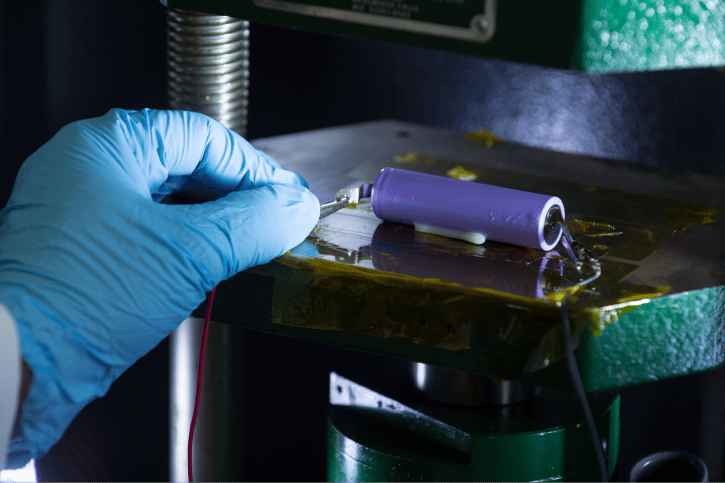
Battery Safety and Abuse Testing
Element delivers advanced battery safety and abuse testing for various chemistries and formats, helping identify risks, support certification, and meet global standards across diverse industries and applications.
Lithium Battery Testing and Certification Services
Ensure safety, performance, and regulatory compliance with comprehensive lithium battery testing. Element's advanced laboratories can test lithium metal and lithium-ion batteries for any application, from medical devices to electric vehicles.

Battery Failure Analysis
Element's comprehensive cell and battery failure analysis identifies failure modes and the root cause of product failure, providing the insights you need to design superior products.