

FCC Bad Labs Ban: What Does It Mean for the True Cost of Compliance Testing?

The FCC's Bad Labs rules have removed dozens of laboratories from the equipment authorization process, with wider bans proposed in 2026. Element Technical Director Steve Hayes explains why the cheapest test report often carries the highest cost, and how to select a laboratory you can trust.
What is the FCC Bad Labs ban?
In May 2025, the FCC adopted rules prohibiting the recognition of any test laboratory, Telecommunication Certification Body (TCB), or laboratory accreditation body that is owned, controlled, or directed by entities linked to foreign adversary governments. The prohibition applies regardless of where the laboratory is located. [1]
Enforcement moved quickly. The first withdrawals of recognition took effect in September 2025, and by April 2026 the Commission had withdrawn or denied recognition to twenty-three laboratories. [2, 3]
On April 30, 2026, the FCC went further. A Second Report and Order created a fast-track review process for equipment authorization applications subject to the Pre-Approval Guidance, or PAG, process when testing is performed by qualifying Trusted Test Laboratories in the United States or in countries with reciprocal recognition arrangements. Note: This process does not apply to all equipment authorization applications. It also required laboratories to disclose the location and number of employees engaged in FCC-recognized testing and strengthened post-market surveillance and enforcement. [3, 4]
Alongside the adopted rules, the Commission proposed prohibiting recognition of test laboratories and certification bodies located in countries that do not have reciprocal testing arrangements with the United States. The FCC has not yet decided the transition period and sought comment on how and when any affected recognitions should be phased out. [3, 4]
What began as a targeted effort to remove laboratories deemed to be owned or influenced by foreign adversaries is now a much broader shift in how the US approaches trust, quality, and supply chain resilience in product certification.
Why is the FCC targeting Bad Labs?
From the FCC’s perspective, this is fundamentally a matter of national security and trust in the equipment authorization process. The Commission has expressed concern that laboratories owned or controlled by entities linked to foreign adversary governments could undermine confidence in the certification ecosystem.
Beyond the political and security dimensions lies a broader industry issue that compliance professionals have discussed for years: relentless downward pressure on testing costs. In competitive markets, laboratory selection is often driven by one criterion: price. When manufacturers face shrinking margins and aggressive launch schedules, choosing the least expensive testing option can appear entirely rational.
Compliance testing is not a commodity. Testing quality depends on engineering competence, facility investment, calibration discipline, interpretation of standards, and the willingness of a laboratory to challenge questionable product performance rather than simply process samples as quickly as possible. When cost becomes the sole selection criterion, quality inevitably comes under pressure.
The impact on global testing capacity
FCC Chairman Brendan Carr stated that more than 75% of equipment testing currently takes place in countries that do not have a reciprocal testing agreement with the United States. This figure is not limited specifically to testing performed in China. [1] The testing workload attached to withdrawn laboratories does not disappear. It moves.
Demand is shifting toward locations with established Mutual Recognition Agreements and recognized accreditation frameworks. Countries across Asia, including South Korea, Taiwan, Singapore, Vietnam, Malaysia, and Thailand, along with laboratories in the US and Europe, are seeing increased demand as manufacturers seek alternative routes to market.
The consequences will be familiar to anyone who has experienced a regulatory bottleneck:
- Longer lead times as recognized laboratories absorb displaced demand.
- Higher testing costs as capacity tightens.
- Increased scheduling challenges, particularly for specialist test types.
- Reduced availability of niche expertise at short notice.
For years, global manufacturers have benefited from the scale of China’s testing infrastructure, particularly because laboratories are located close to manufacturing facilities, reducing logistics costs and shortening development cycles. Replacing that capacity will not happen overnight. Manufacturers planning certification campaigns for late 2026 and 2027 should secure laboratory capacity early.
The hidden cost of cheap compliance testing
A laboratory that charges $3,000 rather than $2,000 appears more expensive. But if the higher-quality laboratory delivers technically robust results, identifies design weaknesses early, avoids retesting, and generates reports that regulators and certification bodies trust without question, the overall program cost may be lower.
In Element’s experience, a cheaper quote is often not the result of a lower hourly rate or faster testing. It is the result of tests being missed or modes of operation not being considered in the test plan at all. A wireless device might be tested in only one operating configuration when the standard requires several. An emissions scan might skip frequency ranges that a certification reviewer will expect to see. None of this is visible on the quote. It comes to light at the end of the process, when a certification engineer reviews the data, precisely when timelines are shortest, and the launch date is closest. At that point, the manufacturer pays twice: once for the original testing and again for the gap analysis, retesting, and delay.
Consider what sits on the other side of the ledger: failed regulatory reviews, additional investigations, retesting costs, delayed product launches, supply chain disruption, and market access delays. A single month's delay in a commercial launch can dwarf any savings achieved by selecting the lowest-cost laboratory. The cheapest test report can quickly become the most expensive outcome.
From cost to value: what manufacturers underestimate
Regulatory compliance ultimately relies on confidence. Regulators must trust the test data. TCBs must trust the test data. Manufacturers must trust the test data. And consumers must be able to trust the products entering the market; the logo on a product is often read by consumers as a mark of safety and fitness for purpose, even where it is not formally a mark of those characteristics.
The FCC’s actions highlight a fundamental truth: testing is not simply about passing requirements. It is about generating evidence that stakeholders can rely on. If regulators begin questioning the source of test data, manufacturers need to think beyond accreditation logos and day rates. They need to understand a laboratory’s technical capabilities, quality culture, regulatory reputation, and track record of producing robust, defensible results.
In Element’s experience, larger manufacturers already understand this dynamic and are shifting their procurement accordingly. Instead of asking "who can do the testing cheapest?", they ask "who can provide results that we can trust, that regulators will accept, and that reduce program risk?" That shift moves the discussion from cost to value: technical competence, regulatory credibility, global acceptance of results, schedule reliability, engineering support, and long-term risk reduction.
How do you evaluate a testing laboratory beyond price?
Before committing to a laboratory, ask these questions. They cost nothing and reveal more than any price comparison:
- Check the scope of accreditation, not just the logo. Confirm the laboratory’s ISO/IEC 17025 accreditation covers the specific standards and test methods your product requires.
- Verify FCC recognition status directly in the FCC’s database, and check whether the laboratory or its parent appears in any current FCC proceeding.
- Look at how the quote was built. A laboratory that quotes without asking detailed questions about operating modes, configurations, and firmware variants has probably not scoped the full test plan.
- Ask who reviews the test data before it leaves the laboratory, and what qualifications they hold.
- Ask about the laboratory’s track record with TCBs, including how often submitted data attracts queries or rejections.
- Ask how marginal or failing results are handled. A laboratory that never challenges a product is not protecting you.
- Factor in regulatory risk by location. Under the 2026 rules, a laboratory’s jurisdiction can affect whether its data remains acceptable over your product’s certification timeline.
- Compare total program cost, not the quote. Include retest risk, launch delay exposure, and the engineering support you will need if something fails.
Conclusion: the true cost of compliance
The FCC’s Bad Labs initiative is reshaping the global compliance testing market. In the short term, it is creating capacity constraints and pushing testing demand toward recognized laboratories in trusted locations. In the longer term, it is forcing the industry to confront an uncomfortable reality: an over-reliance on cost-driven laboratory selection.
Compliance testing should never be a box-ticking exercise or a race to the lowest bid. The purpose of the regulations is to ensure safe, reliable products are put on the market. As regulatory scrutiny increases and trust becomes a differentiator, the true measure of a testing laboratory is not how cheaply it can produce a report, but how confidently that report can be relied on when regulators, customers, and markets demand assurance. The true cost of compliance is best measured as value for money rather than simply cost.
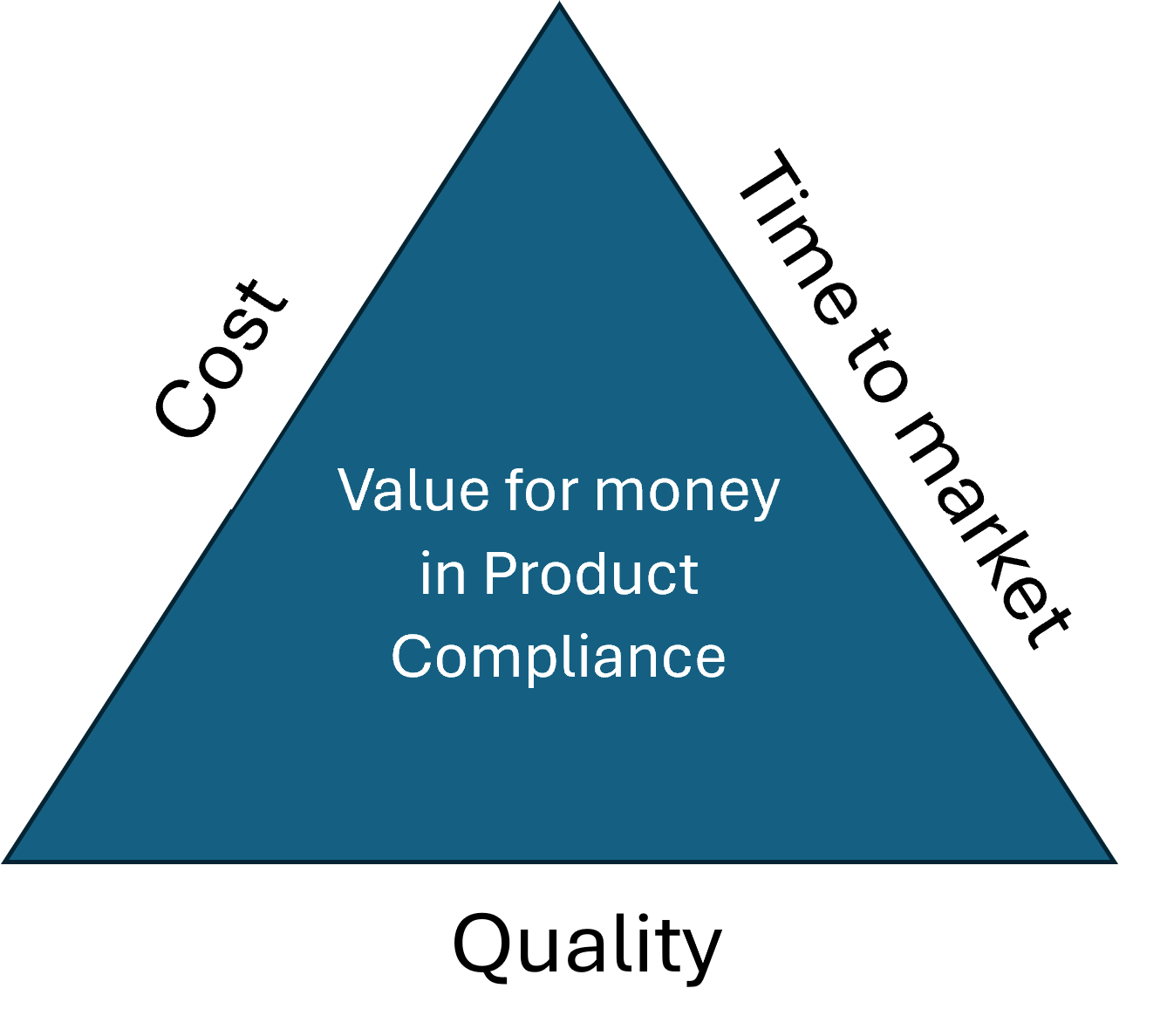
As the figure below shows, value for money in product compliance sits at the intersection of three competing drivers: cost, quality, and time to market. Manufacturers have traditionally been forced to prioritize two at the expense of the third, and cost has too often won. The FCC’s latest actions change that calculation. When a low-cost laboratory can lose its recognition mid-program, quality and trust stop being the optional corner of the triangle.
Element’s FCC certification, EMC, and wireless testing teams support manufacturers through the equipment authorization process from test planning to certification. Find out more about Element and our global network of accredited laboratories.
Frequently asked questions about the FCC Bad Labs rules.
What counts as a Bad Lab under the FCC rules?
A Bad Lab is any test laboratory, Telecommunication Certification Body, or laboratory accreditation body that is owned, controlled, or directed by an entity linked to a foreign adversary government. Such bodies are prohibited from FCC recognition regardless of where they are physically located, meaning a laboratory outside China can still be barred if its ownership falls within scope. [1]
Does the Bad Labs ban affect products that already hold FCC authorization?
Generally, no. The rules target laboratory recognition, not existing product grants, so equipment that already holds an authorization keeps it. The risk sits with products still in development: if your chosen laboratory loses recognition mid-program, new test data from that laboratory can no longer support your equipment authorization application, and you may need to retest elsewhere. Note that separate FCC Covered List actions can restrict specific covered equipment independently of the Bad Labs rules.
What is the FCC fast-track review for trusted laboratories?
On April 30, 2026, the FCC adopted a fast-track review process for equipment authorization applications subject to the Pre-Approval Guidance, or PAG, process when testing is performed by qualifying Trusted Test Laboratories in the United States or in countries with reciprocal recognition arrangements. The process does not apply to all equipment authorization applications. [3] In practice, laboratory choice now directly affects how quickly your product clears review, which strengthens the case for building lab location into your global market access strategy rather than treating it as a procurement afterthought.
How can manufacturers check whether a laboratory is still FCC recognized?
The FCC maintains a public database of recognized accredited test laboratories on fcc.gov. Check it before contracting and again before submission, because withdrawals took effect with little notice throughout 2025 and 2026. For a walkthrough of what the US certification process requires end to end, see our Understanding FCC and ISED Certification webinar.
References
[1] FCC, "FCC Bans ‘Bad Labs’ From U.S. Equipment Authorization Process," Report and Order and FNPRM, adopted May 22, 2025. https://docs.fcc.gov/public/attachments/DOC-411576A1.pdf
[2] FCC, "FCC Takes Action on ‘Bad Labs’ Apparently Controlled by China," September 8, 2025. https://docs.fcc.gov/public/attachments/DOC-414369A1.pdf
[3] FCC, "FCC Looks to Prohibit Electronic Device Testing Using Labs in Countries Without Reciprocal Agreements," Second Report and Order, Order on Reconsideration, and Second FNPRM (FCC 26-28), April 30, 2026. https://docs.fcc.gov/public/attachments/DOC-421311A1.pdf
[4] FCC, "FCC to Ensure Integrity and Security in Electronic Device Testing," April 8, 2026. https://docs.fcc.gov/public/attachments/DOC-420693A1.pdf
By Engaged Expert


Related Services
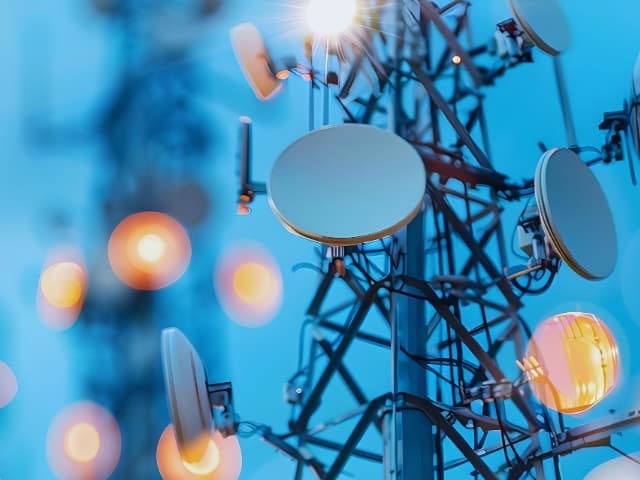
FCC Certification and Testing for the U.S. Market
Get FCC certification for wireless devices from Element, an authorized TCB and CAB (FCC testing center). One accredited lab does it all – test, document, certify.
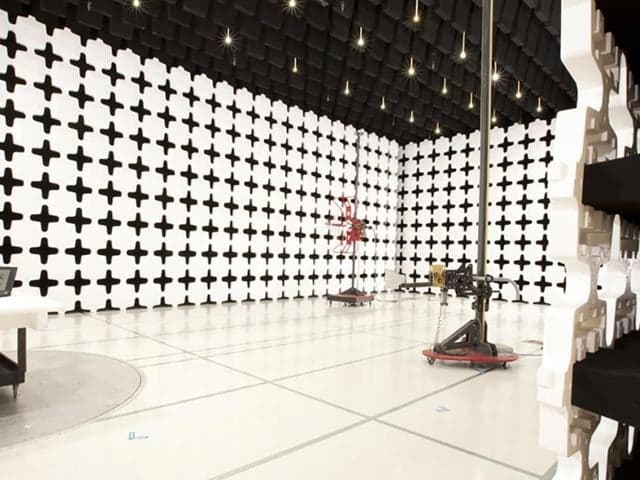
Electromagnetic Compatibility (EMC) Testing & Electromagnetic Interference (EMI) Testing & Certification
Element provides accredited EMC and EMI testing and certification services, helping businesses meet regulatory requirements, reduce costly redesigns, and bring products to market faster through expert compliance support.

Wireless Device Testing & Certification
Get your wireless devices to market faster with Element's accredited testing services. Expert guidance through compliance, certification and global approvals for all wireless technologies.