

Mitigating Risk in AI and Data Center Infrastructure Testing
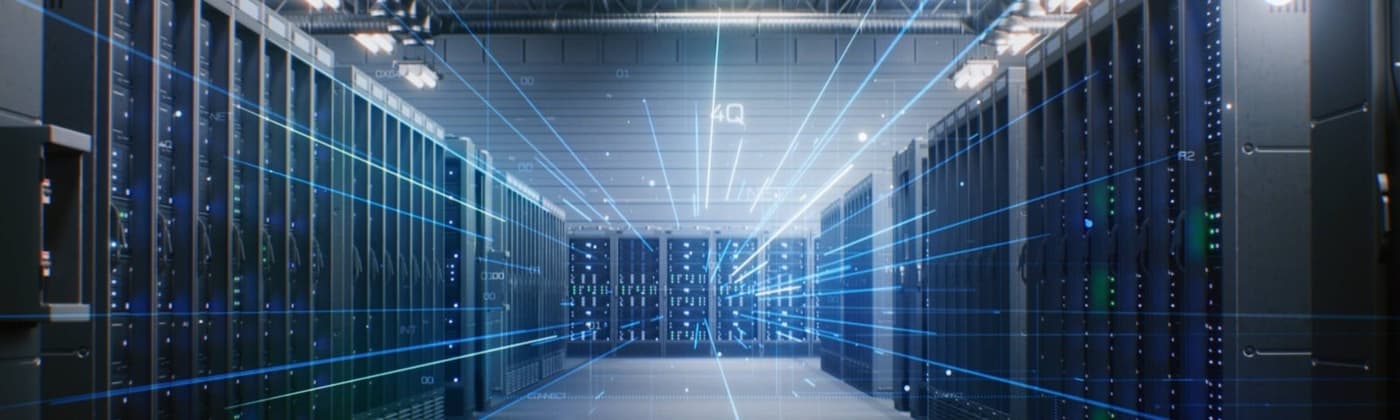
Artificial intelligence is transforming data center infrastructure, introducing new system-level risks that traditional testing methods cannot fully address. This article outlines how combined thermal, mechanical, and electrical stresses create failure points and presents a framework for improving infrastructure reliability.
Why Does System-Level Testing Matter More in AI Data Centers Than Traditional Server Environments?
Traditional enterprise server environments were typically designed around relatively predictable workloads and lower rack densities. AI infrastructure changes both assumptions.
High-performance GPUs generate concentrated heat loads that fluctuate rapidly depending on training cycles, inference demands, and workload balancing. Liquid cooling systems, high-density power architectures, and accelerated deployment schedules create operational conditions that many legacy validation approaches were never designed to assess.
This means testing is no longer focused only on whether an individual component functions correctly. The critical question becomes:
Can the infrastructure remain reliable when every system is operating under simultaneous stress?
Environmental and Thermal Performance
In traditional facilities, thermal testing often focused on maintaining acceptable ambient operating ranges. AI environments require validation under sustained high-density heat conditions where thermal gradients, rapid cycling, and localized hotspots can create hidden risks.
Testing evaluates:
- Thermal cycling under fluctuating GPU workloads
- Compatibility between liquid cooling systems and infrastructure materials
- Condensation risks created by advanced cooling architectures
- Heat rejection performance under continuous load
The objective is to identify how thermal stress affects system interactions over time, rather than measuring only steady-state temperatures.
Mechanical and Structural Reliability
AI environments introduce higher equipment densities, increased cable weight, and more aggressive demands on airflow and cooling systems.
Mechanical testing evaluates:
- Vibration impacts on high-density assemblies
- Structural fatigue from sustained equipment loading
- Mounting integrity under operational cycling
- Long-term stability of interconnected systems
What passes conventional qualification testing may still degrade prematurely when exposed to combined thermal and mechanical stresses over years of operation.
Electrical and Power System Resilience
AI workloads create highly dynamic power demand profiles that differ significantly from conventional computing infrastructure.
Testing validates:
- Load fluctuation response
- Power cycling resilience
- Fault tolerance during transient conditions
- Electrical system stability under sustained peak demand
This is especially important because intermittent instability can cascade through interconnected systems, creating failures that are difficult to diagnose after deployment.
Fire, Safety, and Material Performance
AI infrastructure introduces new fire and material considerations due to increased power density and evolving cooling technologies.
Testing assesses:
- Fire containment behavior
- Smoke generation characteristics
- Material compatibility with cooling fluids
- Performance degradation after heat exposure
The objective is not only compliance but understanding how materials behave during abnormal operating conditions.
How Do You Know When You're Ready to Shift From Compliance-Driven to Risk-Driven Testing?
Many organizations begin reconsidering their testing strategy after experiencing unexpected reliability issues despite meeting existing compliance standards.
Typical warning signs include:
- Repeated infrastructure failures with no single root cause
- Unexpected downtime under peak AI workloads
- Late-stage redesigns during deployment
- Conflicting performance data between suppliers
- Increasing warranty, insurance, or operational concerns
A common misconception is that compliance certification alone guarantees operational reliability. In practice, compliance standards often validate minimum acceptable performance under controlled conditions rather than system behavior under combined real-world stresses.
Organizations that transition effectively to risk-driven testing usually:
- Integrate testing earlier during design and procurement
- Evaluate complete assemblies rather than isolated components
- Simulate operational conditions instead of idealized lab environments
- Prioritize lifecycle performance and degradation analysis
The shift typically occurs when uptime, scalability, and operational continuity become more important than simply meeting baseline specifications.
What Standards Apply to AI Data Center Infrastructure?
AI infrastructure development is advancing faster than many dedicated standards frameworks. As a result, organizations often rely on a combination of existing standards adapted to AI operating conditions.
Commonly referenced frameworks include:
- ASHRAE thermal guidelines for data center environments
- IEC and UL electrical safety standards
- NEBS and Telcordia reliability methodologies
- ASTM environmental and materials testing standards
- NFPA fire protection requirements
- IEC 60068 environmental testing procedures
The challenge is that many existing standards were developed around traditional computing infrastructure rather than high-density AI deployments.
Forward-looking organizations increasingly use standards compliance as a baseline while supplementing validation with application-specific risk testing designed around:
- High-density thermal exposure
- Advanced cooling technologies
- Dynamic electrical loads
- Long-duration operational cycling
Anticipating future requirements means focusing on resilience, scalability, and operational behavior rather than only current compliance obligations.
What Should Procurement Teams and EPCs Ask Their Testing Partner?
As AI infrastructure projects become more complex, procurement teams and EPCs need testing partners capable of evaluating system-level interactions rather than isolated qualification results.
Key questions include:
- Can testing simulate combined thermal, mechanical, and electrical stress conditions?
- Can full assemblies and interfaces be evaluated instead of individual components?
- How is long-term degradation assessed?
- Can testing replicate real operating conditions and deployment environments?
- How are emerging AI infrastructure risks incorporated into validation strategies?
Strong testing partners provide data that supports operational decision-making, risk mitigation, insurance discussions, and long-term infrastructure planning rather than simply issuing pass/fail certifications.
What Common Misconceptions Exist Around AI Infrastructure Testing?
One of the most common misconceptions is that AI infrastructure can be validated using the same assumptions used for traditional enterprise server environments.
Several legacy assumptions no longer consistently hold:
- Passing component-level testing guarantees system reliability
- Thermal performance can be evaluated independently of electrical and mechanical behavior
- Compliance certification alone ensures operational resilience
- Short-duration qualification testing accurately predicts long-term performance
- Cooling systems behave predictably under all operational conditions
In practice, AI infrastructure failures frequently stem from interactions among systems rather than from individual component defects.
The industry is gradually shifting from validating isolated performance metrics toward understanding how infrastructure behaves under sustained, overlapping, and evolving operational stresses.
Conclusion
AI infrastructure is changing how data centers must be designed, validated, and operated. As rack densities increase and thermal, electrical, and mechanical stresses converge, traditional component-level testing is no longer sufficient to predict real-world performance or long-term reliability.
Organizations that continue relying solely on compliance-based validation risk overlooking the system-level interactions that increasingly drive downtime, degradation, and operational instability in AI environments. A more resilient approach requires testing infrastructure under combined operating conditions, evaluating lifecycle performance, and identifying risks at system interfaces before deployment.
As AI workloads continue to evolve, the industry is shifting from isolated qualification testing toward risk-driven validation strategies focused on operational behavior, scalability, and infrastructure resilience.
Companies that adopt this approach earlier will be better positioned to improve uptime, reduce operational uncertainty, and support long-term infrastructure performance in increasingly demanding AI environments.
By Engaged Expert

Related Industries
Related Services

Environmental Testing Services
Our experts and network of accredited laboratories offer environmental testing services for water, soil, sediments, waste, air quality, emissions and more. Learn More.
Fire and Flammability Testing Services
Explore the range of fire & flammability testing services from Element. Ensure compliance with global labs, expert guidance & fast results.
Materials Testing Services
View our comprehensive materials testing service range, combining destructive and non-destructive testing for a wide range of materials and industries.