EMC Pre-Compliance Testing: Practical Design Insights for Engineers

EMC pre-compliance testing is early-stage measurement of a product’s electromagnetic emissions and immunity, carried out during design and development to expose EMC risks before formal compliance testing. In this on-demand webinar, Element EMC Principal Engineer Jeff Markham draws on nearly four decades in automotive and defense EMC to show how engineers can treat pre-compliance as a design and diagnostic tool, not a pass/fail rehearsal. He covers what the method reveals, where it falls short, how test setup affects correlation with an accredited chamber, and the design decisions that determine whether a product clears formal EMC testing the first time.
Why watch this EMC pre-compliance testing webinar?
This is a practical session, not an EMC theory primer. It is built for engineers who design products against EMC limits and want a clear view of where their program is most exposed.
After watching, you will be able to:
- Spot the design decisions that drive radiated and conducted emissions before you commit a board to manufacture.
- Run useful pre-compliance measurements without a chamber, using a bench, an oscilloscope FFT, and near-field probes.
- Set up a bench so its results track an accredited chamber, through ground plane, harness layout, calibration, and correction factors.
- Read trends across design iterations instead of chasing absolute numbers you cannot yet trust.
- Judge when pre-compliance is enough and when to move to a full compliance lab.
- Cut the risk of a six to eight week redesign and retest loop before a locked launch date.
Key topics covered
- What does EMC pre-compliance testing reveal, and what can it not tell you?
- How do test setup and correlation affect the quality of your results?
- Which bench techniques work: conducted emissions, near-field scanning, bulk current injection, and time-domain FFT?
- Where does electromagnetic interference come from, inside the board and outside it?
- How do you identify EMC risk early, at the system and schematic stage?
- Which design decisions drive EMC compliance: power supply choice, PCB stack-up, grounding, and signal routing?
- What are the common causes of EMC failures during development?
- When do you need an external EMC lab?
By Engaged Expert

Related Industries
Webinar timeline
Total runtime is about 49 minutes. Use the timestamps to jump to a topic in the recording below.
0:00 – Introduction
Jeff Markham opens the session and explains his background: EMC Principal Engineer at Element’s Burton, Michigan lab, with nearly four decades in automotive and defense EMC. He sets out what the webinar covers, from what pre-compliance realistically reveals to the design decisions that drive a first-time pass.
2:09 – What pre-compliance testing is, and what it is not
Pre-compliance flags EMC risk early, supports design iterations, and cuts the cost of late failures, but it does not guarantee full compliance, and it cannot get a product to market on its own. Jeff is clear that it complements, and never replaces, the formal testing required to meet standards such as FCC Part 15. Treat it as a diagnostic tool, not a cheaper rehearsal of the chamber.
3:55 – What pre-compliance realistically reveals
The measurements reveal where the schematic and board need work, from a switch-mode supply with runaway harmonics to conducted and radiated emissions exceeding the limit. Jeff shows how a bench setup with an oscilloscope FFT and near-field probes locates hot spots on a PCB or harness and provides a workable approximation of the compliance limit before you book chamber time at an accredited EMC testing laboratory.
7:32 – How setup and correlation affect result quality
Result quality depends more on the setup than on the instrument. Jeff walks through the variables that drive correlation with a formal chamber: the test environment, ground plane and harness layout, equipment calibration, and correction factors for probes and antennas. Skip these, and the data skews toward one extreme, which is why he stresses mimicking the harness lengths and ground-plane size specified by the standard.
10:52 – How to improve correlation
The practical fix is to design against an internal target set below the published limit, so the margin absorbs the uncertainty you cannot measure on a bench. Jeff also argues for reading trends across six or eight design iterations rather than chasing an absolute number you cannot yet trust. Repeatability and a known measurement uncertainty are what separate a development bench from an accredited lab.
14:25 – Effective pre-compliance techniques
Jeff runs through the techniques that give the most return for the least spend: conducted emissions by the voltage method with a LISN or the current method with a clamp, near-field scanning with sniffer probes to find magnetic-field hot spots, bulk current injection for immunity, and time-domain FFT on an oscilloscope. Much of this equipment can be rented or built, so a small team can start without capital investment.
20:03 – Where pre-compliance falls short
Pre-compliance cannot answer everything. Jeff covers the limits: a non-ideal test site near a transmitter, the bandwidth and pre-selection gaps of a spectrum analyzer against a compliance-grade EMI receiver, immunity fields you cannot generate without a chamber, and an EMC test plan that is not ready. A missing or generic plan is a common failure point, which is why he points teams to build a proper EMC test plan and checklist before they start.
25:04 – Where electromagnetic interference comes from
Jeff ranks the internal sources he sees most in the lab: switch-mode power supplies first, then microcontrollers and high-speed digital logic, then bus protocols and Ethernet transceivers that radiate off cabling. External sources include EV and hybrid charging systems that couple noise between the vehicle and the grid, and electrostatic discharge that leaves latent damage months before a part fails. For vehicle programs, this maps directly to automotive EMC testing.
30:10 – Techniques for identifying risk early
The cheapest risk reduction happens before layout. Jeff recommends a system-level EMC review of the block diagram, time on the schematic to add debug pads and zero-ohm jumpers, and simulation tools with near-field and far-field solvers, which Element supports through electromagnetic simulation and modeling. He also flags the RF section that shares a board with switching supplies as an early risk to identify, relevant to radio and wireless testing.
37:12 – Design decisions that drive compliance
Jeff lists the decisions that determine the outcome: system architecture planning, choosing a linear regulator over a switcher where speed is not needed, PCB stack-up and ground-plane continuity, high-speed signal routing and decoupling, and mechanical enclosure grounding. His line is blunt. Design because you need fast, not because you want fast, and slow every rise and fall time you can.
40:49 – Common causes of EMC failures during development
The recurring failures are grounding strategy, excessive loop areas from poor routing, decoupling errors, and breaks in shield termination that must run a full 360 degrees. Jeff corrects a common myth that more decoupling capacitors are always better and warns that skipping pre-compliance almost guarantees a six- to eight-week return to the chamber for a new design iteration.
43:31 – When to use an external EMC lab
Move to a lab when the team lacks the knowledge, equipment, or a shielded environment; when the design freeze is approaching without pre-compliance data; or when measurement uncertainty is suspected, and correlation cannot be trusted. Full compliance ultimately requires an accredited lab, and Element runs accredited EMC facilities across North America and Europe for automotive, medical, industrial, aerospace, and defense EMC testing.
45:39 – Practical takeaways
Jeff closes the technical section with his rules. Pre-compliance reveals risk, not a pass or fail. Setup quality determines the value of the data. EMC issues come from design decisions, not a lack of planning. Early diagnostics reduce late redesigns. EMC success is a design activity, not a test event.
47:47 – About Element’s EMC capabilities
Jeff gives a short overview of Element’s testing, inspection, certification, and calibration services, an EMC laboratory network spanning automotive, medical device, industrial, aerospace, and defense, and how to reach the team for test plan support or development testing. The Burton, Michigan lab runs three shifts for EMC work.
If you are preparing for formal EMC testing, our accredited EMC testing laboratories support programmes across automotive, aerospace, medical device, industrial and connected technology applications. To discuss your specific EMC challenge, speak to one of our experts.
Related Services
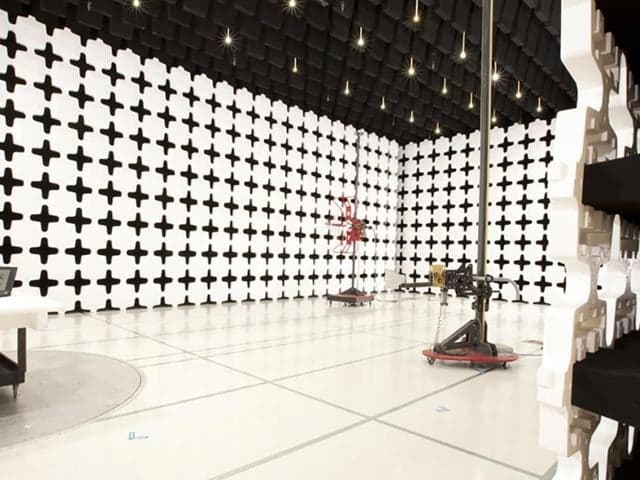
Electromagnetic Compatibility (EMC) Testing & Electromagnetic Interference (EMI) Testing & Certification
Element provides accredited EMC and EMI testing and certification services, helping businesses meet regulatory requirements, reduce costly redesigns, and bring products to market faster through expert compliance support.

Automotive EMC Testing
Element provides comprehensive EMC testing services that simulate real-world scenarios to validate both whole vehicles and sub-assemblies, meeting international standards for safety and performance.

Medical Device EMC Testing
Element provides EMC testing and certification for Class I-III medical devices, helping manufacturers meet global regulatory standards and accelerate market entry with expert guidance and accredited laboratories.
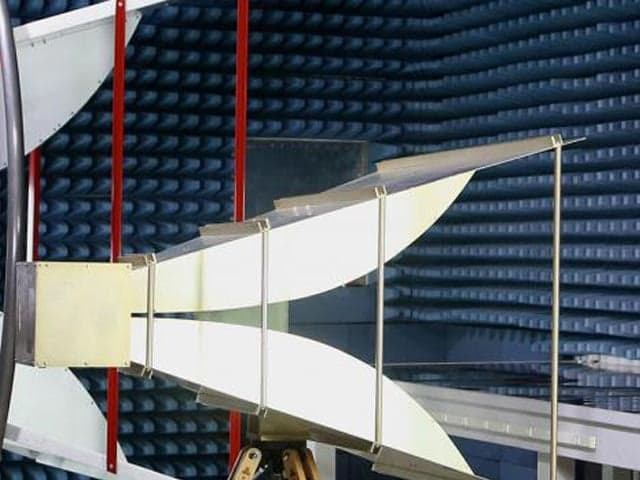
MIL-STD-461 Testing Services
Access accredited MIL-STD-461 testing with secure ITAR handling at our specialized military EMC testing facilities. Our MIL-STD-461G testing validates defense systems up to 70 tons with 200V/m capability.

Wireless Device Testing & Certification
Get your wireless devices to market faster with Element's accredited testing services. Expert guidance through compliance, certification and global approvals for all wireless technologies.