IEC 60079-14 Annex C: Ex d Cable Pressure Test Requirements Webinar
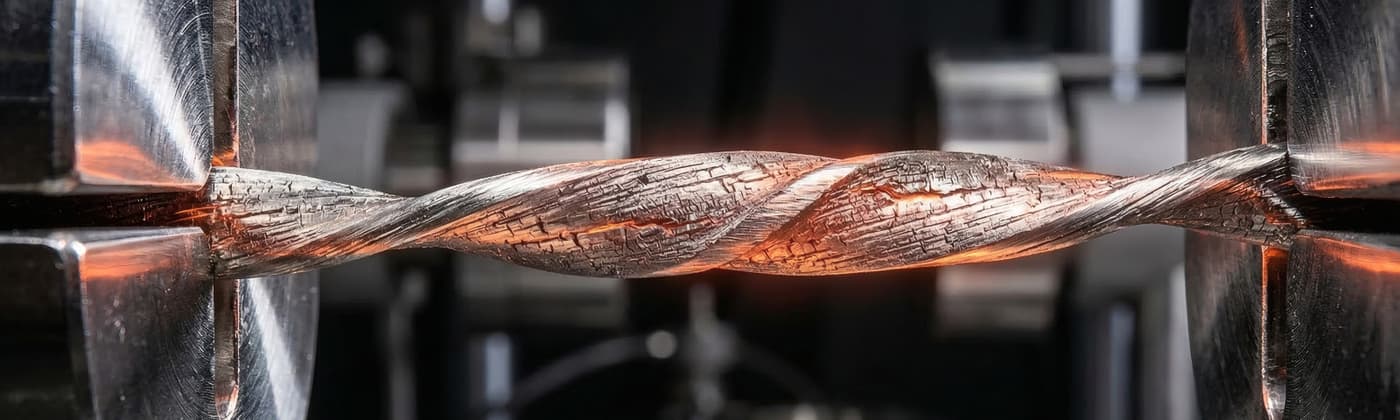
IEC 60079-14:2024 makes the Annex C cable pressure test mandatory for certain Ex d installations — but passing it is not the same as proving a cable is gas-tight. Jonathan Hichens, drawing on seven years of R&D and certification experience and membership of the IEC TC 31 committee that wrote Edition 6, explains what the test measures and what evidence will satisfy an inspector.
Why Watch This Webinar on IEC 60079-14:2024 Annex C?
IEC 60079-14:2024 makes Annex C mandatory for certain Ex d installations, but most engineers working on hazardous area projects have not seen the test, do not know exactly where it sits in the selection flowchart, and are unclear on what evidence will satisfy an inspector. Jonathan Hichens spent seven years in R&D and certification at a cable gland manufacturer, testing barrier and non-barrier glands, and represented the UK at the IEC TC 31 committee meeting in the US in 2022, where the flowchart and Annex C requirements were finalised. He walks through the Annex C procedure from direct testing experience, what it measures, what it does not measure, and what documented evidence you need before you can use a non-barrier entry device. If your organization specifies, installs, or inspects Ex d cable installations, this is the clearest available explanation of a requirement that is now mandatory, delivered by someone who helped write it.
What Does the IEC 60079-14:2024 Annex C Webinar Cover?
- Why was informative Annex E in Edition 5 rarely used, and what changed when Edition 6 made it normative
- Where Annex C sits in the Edition 6 selection flowchart, and the exact conditions that trigger it
- The full test procedure: enclosure volume, cable sample length, test pressure, hold time, and pass criterion
- What the test proves about a cable's internal construction and flame propagation behavior
- Why an Annex C pass does not mean a cable is gas-tight and why that distinction matters
- What qualifies as sufficient reliable evidence, and why a catalog reference alone may not be enough
- Who can conduct the test, what competence is required, and when third-party certification adds value
- How the Annex C requirement connects to the broader shift from component compliance to system assessment in Edition 6
Jonathan Hichens walks through the Annex C pressure test, how it fits into the Edition 6 selection flowchart, and what it means for organizations currently relying on non-barrier cable entry devices.
From Informative Annex E to Normative Annex C
In Edition 5 (2013), cable pressure testing sat in informative Annex E — referenced but not mandatory. Compliance could be demonstrated through cable geometry and length criteria alone, without cable-level test evidence. The sixth edition promotes the test to normative Annex C: the procedure is substantially the same, but it is now specified in sufficient detail to be consistently repeatable, and where the selection flowchart calls for evidence, that evidence must stand up to scrutiny.
The practical consequence is that cable performance can no longer be assumed from a catalog description. For certain installations, someone — the cable manufacturer, equipment designer, end user, or a third-party test laboratory — must generate or reference credible test data.
The shift from informative to normative matters more than it might appear. Jonathan Hichens notes that Annex E existed in Edition 5 but was almost never used in practice precisely because it carried no mandatory weight. In his experience presenting this topic to end users and installers, the most common reaction to Annex C is not concern about the test itself, but concern about the admin burden of producing and maintaining sufficient reliable evidence. That reaction is driving many organizations to standardize on barrier glands outright rather than pursue the non-barrier route, which requires documented test records that will stand up to inspector scrutiny.
For the broader context of how Annex C fits into the Edition 6 changes, including the new flowchart, stakeholder impacts, and the shift from component to system assessment, see the companion article: How IEC 60079-14:2024 Redefines Flameproof Cable and Cable Gland Selection in Hazardous Areas.
What the Annex C Test Is — and What It Isn't
Annex C opens with a deliberately narrow statement of purpose: the test is solely to assist in determining whether an Ex d entry device with an elastomeric seal can be used with a given cable, in conjunction with the Edition 6 flowchart. The standard goes further, stating that the test "shall not be used for any other purpose" and that it "does not prove that the cable is 'gas tight'."
This matters. "Gas-tight" has become commercial shorthand used widely by cable manufacturers and specifiers, but it has no formal definition in the IEC standard. An Annex C pass demonstrates that a specific cable construction, tested under the specified conditions, exhibits acceptable behavior for gland-selection decision-making — nothing more. Treating the result as a general "gas-tight" certification overstates what the test delivers and reintroduces assumption-based risk that the revised standard is designed to remove.
Inside the Test Apparatus
The Annex C procedure is built around a simple, replicable arrangement:
- A representative cable sample 0.5 m long (±10 mm), fitted to a rigid, sealed test enclosure of 5,000 cm³ (±200 cm³)
- The cable entry point is arranged so that minimal mechanical pressure is applied to the cable surface; the test assesses the cable itself, not gland compression
- Air introduced through a hand pump, bellows, or similar device, via an isolating valve and connecting hoses
- Pressure monitored with an instrument accurate to a minimum of ±0.01 kPa
The sample must be fully specified: a representative cable identified by manufacturer, type, size, and number of conductors. Generic category testing is not sufficient; the tested construction is the evidenced construction.
The test procedure:
- Apply a pressure of 0.3 kPa (300 pascals) to the enclosure
- Close the isolating valve
- Observe for 5 seconds
Pass criterion: The pressure must not drop by more than 50% in 5 seconds.
The test pressure is intentionally low. The correlation between this 5-second low-pressure test and an actual explosion event is documented in IEC SC31J-SD-001, a background document produced by the IEC TC 31 maintenance team presenting decades of flame transmission test data. If the pressure drops by more than 50% in 5 seconds, the cable has too many gaps between conductors to prevent flame propagation, and a barrier-type entry device is required for that installation.
Jonathan’s experience of running these tests at a cable gland manufacturer is instructive here. The test pressure of 0.3 kPa is deliberately low, but what it reveals about cable construction is significant. Cables that fail do so because the gaps between conductors are large enough to allow pressure to escape rapidly, the same gaps that would allow a flame front to travel along the cable core in a real explosion scenario. A cable that looks round and compact from the outside can still fail if its internal construction does not adequately fill those interstitial spaces. That is precisely why catalogue descriptions and visual inspection are not sufficient evidence, and why the test exists.
Where Annex C Sits in the Selection Flowchart
Annex C is not applied to every Ex d installation. The Edition 6 flowchart routes users through gas group, cable length, and rated enclosure volume first:
- A barrier-type entry device is required immediately for cables shorter than the minimum length threshold in higher-risk atmospheres (3 meters for IIC / IIB + H₂; 0.5 meters for IIA / IIB)
- An elastomeric-seal device is permitted without further evidence for enclosures below 2,000 cm³ on the lower-risk (IIA / IIB) branch
Annex C evidence is triggered at one specific point: where rated enclosure volume is 2,000 cm³ or greater, or cannot be confidently established. At that point, if sufficient reliable evidence exists that the cable would meet the Annex C criteria, an elastomeric-seal device may be used. If that evidence is absent, a barrier-type device is required.
What Qualifies as "Sufficient Reliable Evidence"
The flowchart's evidence requirement is as important as the test itself. The standard makes clear that evidence could take several forms — for example, a cable manufacturer's confirmation or user-conducted testing, but warns that reliance solely on a manufacturer's catalog number may not be adequate, because production variances can change cable performance between batches. Cable compactness must also be taken into account.
In practice, a catalog reference to a part number that "meets Annex C" is not, on its own, the end of the enquiry. Documented test data tied to the specific cable construction with full identification of manufacturer, type, size, and conductor count is the robust position. Where that documentation is absent or incomplete, the conservative route is either a barrier-type entry device or commissioning the test before the installation proceeds.
For organizations operating across ATEX, IECEx, UKEX, or HazLoc certification schemes, that evidence may also need to satisfy the inspection and documentation requirements of the relevant scheme. Understanding how these schemes interact is covered in Element's global hazardous location compliance whitepaper.
Who Can Conduct the Test
Annex C places no restriction on who runs the test, stating only that it may be completed by the cable manufacturer for the type of cable supplied, or by any other competent person. The standard's embedding of personnel competence into its scope (Clause 1, Clause 5.5, and Annex A) means "competent person" is no longer informal language; whoever generates the evidence must demonstrate the capability to set up the apparatus to specification, conduct the procedure correctly, and interpret the result against the flowchart.
In Jonathan’s experience, the competence requirement is where many organizations underestimate the task. Running the test is straightforward. Setting up calibrated equipment, writing documented procedures, and producing records that satisfy an inspector with knowledge of Edition 6 is a different level of commitment — one that in-house teams without a formal test programme are often not prepared for.
In-house testing is viable for organizations that can meet those requirements and maintain calibrated equipment and documented procedures. For those that cannot, or where independent verification carries more weight with inspectors and end users, third-party testing is the practical alternative.
Element can conduct the Annex C pressure test and issue a third-party test certificate. A certificate from an accredited laboratory carries significantly more weight as "sufficiently reliable evidence" than internal records, particularly for installations subject to independent inspection or where an end user requires formal assurance. If you are planning an installation that relies on non-barrier glands, building Annex C testing into the program from the outset is more efficient than attempting to produce retrospective evidence.
Key Takeaways
Annex C is a small procedure with significant responsibility. It is the single piece of cable-level evidence that can move an Ex d installation from a mandatory barrier-type entry device onto the elastomeric-seal branch of the flowchart. Jonathan Hichens, who has tested cable glands for seven years and helped finalise this requirement at the IEC TC 31 committee level, is direct about the practical outcome: most end users who work through the flowchart properly are choosing to standardize on barrier glands rather than carry the evidence burden. That is a legitimate choice. But for manufacturers producing the same equipment repeatedly who want to retain the non-barrier option, Annex C provides a clear, testable path, provided the records are maintained. Understanding what the test proves, what it does not prove, and what counts as reliable evidence is now core to correctly applying IEC 60079-14:2024.
To discuss Annex C third-party testing for your installation or product program, contact Element's explosive atmosphere experts.
Frequently Asked Questions
What does the Annex C pressure test in IEC 60079-14:2024 actually measure?
Annex C measures whether a cable's internal construction contains enough gaps between conductors to allow flame to propagate through it under explosion conditions. A 0.5-meter cable sample is fitted to a 5,000 cm³ test enclosure with minimal external compression, pressurized to 0.3 kPa, and the pressure is then isolated. If the pressure does not drop by more than 50% in 5 seconds, the cable passes. The test is specifically scoped to inform the gland-selection decision; it does not assess the gland, the installation, or the broader sealing system.
Does passing the Annex C test mean a cable is gas-tight?
No. IEC 60079-14:2024 explicitly states that Annex C "does not prove that the cable is 'gas tight'." The term "gas-tight" has no formal definition in the IEC standard and is used commercially by cable manufacturers without a standardized basis. An Annex C pass means the tested cable construction, under the specified test conditions, meets the pressure-retention criterion that allows an elastomeric-seal entry device to be used under the Edition 6 flowchart. It does not certify the cable as gas-tight in any general sense.
Can a cable manufacturer's test data count as Annex C evidence?
It can, provided it is specific enough. The standard warns that a catalog reference alone may not be adequate because production variances can affect performance between batches. Evidence should identify the cable by manufacturer, type, size, and number of conductors, and should be based on actual test data rather than a general product claim. Where data is too generic or undocumented, the conservative position is to use a barrier-type entry device or commission a new test on the specific cable construction being used.
Does the Annex C test need to be done by an accredited laboratory?
The standard does not restrict who can conduct the test, stating it may be completed by the cable manufacturer or any other competent person. However, it requires the person to be competent to set up the apparatus correctly, conduct the procedure, and interpret the result — and Edition 6 embeds personnel competence into the scope of the standard. Third-party testing by an accredited laboratory produces evidence that carries more weight with inspectors and end users than in-house records, particularly for installations subject to independent verification.
At what point in the IEC 60079-14:2024 flowchart is Annex C evidence required?
Annex C is required only at one specific decision point in the flowchart: where you are on the IIA / IIB gas group branch, the cable meets the 0.5-meter minimum length, but the rated enclosure volume is 2,000 cm³ or greater, or cannot be confirmed. At that point, you need sufficient reliable evidence that the cable would pass Annex C to use an elastomeric-seal entry device. If you are on the IIC / IIB + H₂ branch with a cable of at least 3 meters, Annex C evidence is also required before a non-barrier gland can be used. In both cases, if the evidence is absent, a barrier-type device is required.
How does the Annex C test differ from the informative Annex E in Edition 5?
The underlying test procedure is broadly similar, but the status and detail are different. Annex E in Edition 5 was informative, referenced, but not mandatory, and lacked the prescriptive detail needed for consistent repetition. As a result, it was rarely used in practice. Annex C in Edition 6 is normative, meaning it is mandatory where the flowchart routes to it. It is also specified in enough detail to be repeatable: enclosure volume, cable length, pressure, timing, and measurement accuracy are all defined. The shift from informative to normative is the change that makes it operationally significant.
Related Services
Explosive Atmosphere Testing and Certification
Element ensures your products comply with global explosive atmosphere testing regulations, including Global IECEx certification, ATEX certification for Europe, UKEX for United Kingdom, HazLoc certification for North America & DSEAR in the UK.

Electrical Safety Testing and Certification Services
Accelerate your electrical product's journey to market with Element's comprehensive Electrical Safety Testing and Certification services. Navigate certification requirements efficiently, reducing time and costs while maintaining rigorous safety standards.