

Using Pre-Approved Radio Modules in North America: A 10-Point FCC and ISED Checklist
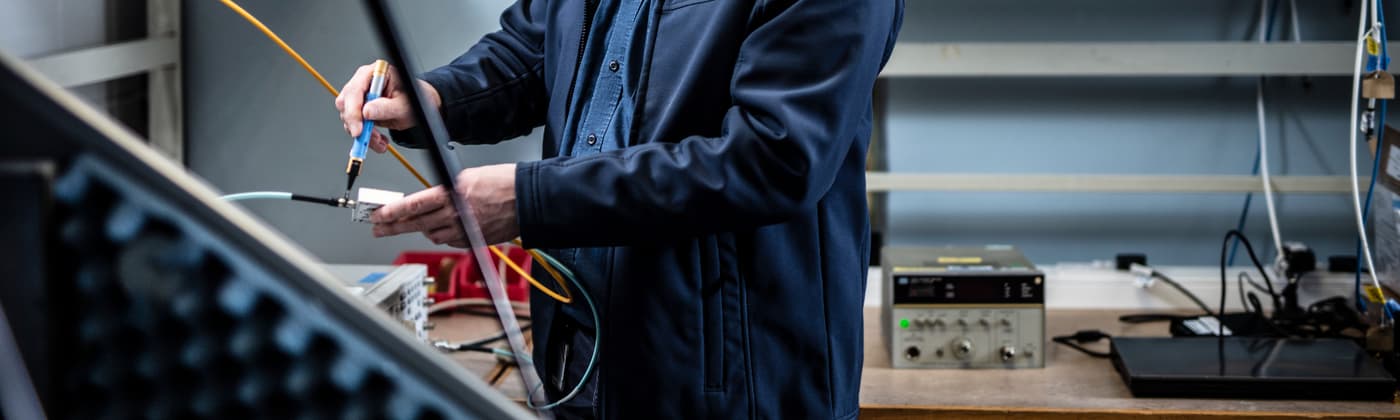
Pre-approved radio modules remain the fastest route to a US or Canadian wireless approval, but the certification belongs to the module, not to your product. Integrate one into your own host, and every condition in that grant becomes your responsibility, and the FCC and ISED impose them differently.
In this article, wireless expert Alex Toohie outlines a 10-point checklist for manufacturers using pre-approved radio modules in North America, covering the main requirements to complete before you ship into either market, and explains where the two regimes diverge.
The FCC and ISED both regulate radio emissions and EMC, and neither regulates product safety beyond RF exposure. Both allow modular approval so a certified transmitter can be reused across host products. Where they differ is on certification validity, labeling, documentation access, and what happens when a small device contains more than one radio. Those four differences drive most of the rework we see.
If the EU or UK are also on your market list, read our companion 10-point CE marking checklist for pre-approved radio modules for more information.
1. Is It a Module, and Is the Approval Full or Limited?
First, confirm you have a complete modular transmitter, not just a chipset. Then confirm which kind of modular approval it has, because that distinction determines whether the approval carries over to your host at all.
For the difference between a certified module and a bare chipset, and how that changes your compliance scope, read our article on the compliance differences between radio modules and chipsets.
- For the FCC under 47 CFR 15.212, full modular approval, often called FMA, requires shielded RF circuitry, buffered data or modulation inputs, the module's own power supply regulation, permanently attached or uniquely connected antennas, and standalone testing. A module meeting all of those can be incorporated into another product without the host manufacturer obtaining a new certificate.
- ISED applies a similar list of criteria, including a requirement that the module complies with the relevant specification's antenna and amplifier provisions.
- Where only some conditions are met, the result is a limited modular approval, or LMA, which restricts the module to prescribed host products in which the unmet conditions were shown to be satisfied. Buying an LMA part for a host it was not scoped against gives you no usable approval.
- In both countries, split modular and limited split modular approvals also exist for designs where the radio front end and antenna are physically separated from the control elements.
2. Have You Read the Grant of Equipment Authorization?
This is a check we often see manufacturers skip, but is expensive to correct later. An FCC-approved transmitter's certification sits on the FCC's online database as a Grant of Equipment Authorization, and the conditions printed at the bottom of it are binding. Common conditions restrict co-location with other transmitters, prohibit operation within 20 cm of a person, and permit only specified antennas.
If you breach any condition, the module's certification no longer covers your product. You then need either a modification to the existing certification or a new one, and either way you may need new test evidence. Read the grant before the design is committed, not after the enclosure is tooled.
3. Can You Verify the ISED Certificate Conditions At All?
Here the two regimes diverge sharply.
- The FCC's database is public, so you can look up a grant and read its conditions yourself.
- Canada has no public equivalent. The Radio Equipment List will confirm that a device is certified and shows some technical parameters such as output power, but it does not show the conditions of use attached to the certificate.
The only reliable way to establish those conditions is to obtain a copy of the certificate from the certificate holder. Build that request into supplier qualification, because discovering mid-project that nobody can tell you what the Canadian conditions are is a genuine blocker rather than a paperwork delay.
4. Do You Have the Test Reports, and Do They Reflect Your Configuration?
Both schemes require testing before certification; there is no route to an FCC or ISED approval on documentation alone. The FCC additionally requires that test evidence comes from an accredited laboratory specifically listed on its test lab database for the relevant tests, and will not accept results from a lab outside that listing.
When you obtain reports, check the configuration and the margins rather than just the verdict. Note the antenna fitted, the measured output power and radiated spurious levels, the modes exercised and the temperature range. Those measurements become your baseline for comparison once the module is inside your host.
5. Does Your Host Labeling Meet Both Sets of Requirements?
When a certified module is embedded in a host, the host must carry the module's identifier.
The usual FCC form is a statement such as “Contains FCC ID: XXXXX”, and the same principle applies to the ISED certification number. A device can legitimately show more than one FCC ID or ISED number on its enclosure where it contains multiple embedded modules.
ISED Canada adds a requirement that catches manufacturers focused on the US: the user manual statements required by RSS-Gen must be provided in both English and French. Where the host is too small to carry a physical label, e-labeling may be an option, but the conditions differ between the two regimes and need checking against the specific device rather than assumed.
For more detail on module integration and the testing and regulatory requirements associated, read our integration guide here.
6. Have You Changed Anything, and Is It a Permissive Change or a New ID?
This is one of the biggest areas we find manufacturers get caught out. Whilst both regulators allow defined changes to certified equipment, and both draw the line in a similar place, the class structures differ and it's important to understand this early in your product development.
The FCC uses three classes:
- Class I changes do not degrade the characteristics reported at certification and can be processed by the manufacturer
- Class II changes do degrade them and must go via a TCB
- Class III covers parameter changes to a software-defined radio
ISED uses four:
- Classes I and II mirror the FCC
- Class III specifically covers firmware changes that degrade reported characteristics or add frequency bands
- Class IV, which has no FCC equivalent, covers new hosts for certified modules. If your integration puts a module into a host type the certificate does not contemplate, Canada has a defined route for that and the US does not
Some changes preclude the permissive change process entirely in both countries. Changes to active radio electronics such as amplifiers, and any increase in overall output power, require a new FCC ID and cannot be handled as a permissive change.
The expensive mistake many manufacturers make here is assuming that a minor change must be a Class I change, without qualifying that assumption. Remember, there is no route to FCC and ISED approval without testing; when any change is made, the first step is to test the resulting device to ensure that the performance has not been degraded.
7. Should the Certification Be in Your Name?
If you expect to make changes to the product over its life, holding the certification yourself is usually worth the administrative effort.
- The FCC route is a Change in ID, which lets a company take responsibility for a certified radio in its own name, and is available even where nothing about the device has changed.
- The equivalent in Canada is a Multiple Listing, which creates a copy of an existing modular certificate under your name.
The practical benefit is the same in both markets. Once the certification is yours, you can process further changes, including a Class II permissive change, without affecting the module manufacturer's original certification or depending on their cooperation and timescales. In fact, for many module vendors, this change in ownership of the certificate is often a prerequisite to being able to apply any Class II, III, or IV permissive change to their modules.
For a more detailed breakdown of how to manage changes and product variants and their associated compliance, watch our webinar here.
8. Does the RF Exposure Authorization Match How the Product Is Used?
Both regulators require RF exposure to be assessed for every device incorporating a transmitter, either by calculation for lower-power equipment used away from the body or by measurement for higher-power and body-worn equipment. Based on the result, the device is authorized for fixed, mobile or portable use, and it is not permitted to operate a transmitter in a condition for which it was not authorized.
This is a design-stage question, not a certification-stage one. If you select a module authorized for mobile use and then build a handheld product, you will need to update the module's authorization through a permissive change. Note also that SAR must be measured on the end device in its final enclosure, so module-level SAR data rarely transfers.
Canada handles the underlying requirement through RSS-102, which offers several routes depending on frequency and use: nerve stimulation assessment between 3 kHz and 10 MHz, SAR between 100 kHz and 6 GHz for equipment used within 20 cm of the body, absorbed or incident power density above 6 GHz, and field reference levels for equipment used at more than 20 cm. Every transmitter sold into Canada must be approved against RSS-102 by one of those routes or by an exemption calculation. For more information on the latest changes to RSS-102 issue 6, read our whitepaper here.
9. Are There Multiple Transmitters, and How Small Is the Device?
One of the biggest challenges we see manufacturers face, often too late in their product compliance phase to easily adapt the device, is the use of multiple modules in one device. Modular certifications commonly state that the module must not be co-located with another transmitter except in accordance with official multi-transmitter guidelines. Those guidelines are spread across FCC and ISED rule parts, KDB publications, and technical workshops rather than sitting in one document, and the obligation they create is to demonstrate compliance in all possible configurations, including simultaneous transmission. From an EMC perspective this normally means an intermodulation investigation. The FCC expects to see intermodulation results where multiple radios share one antenna, which is common in 2.4 GHz modules.
Canada imposes a harder rule that has no US counterpart. For handheld or wearable devices, or devices with a maximum dimension under 20 cm, host certification is always required where more than one transmitter is present, regardless of whether the modules are already approved for portable use and regardless of whether they can transmit simultaneously. If you are building a small multi-radio device, budget for Canadian host certification from the outset.
10. Is the Certification Still Valid Today?
In the US, generally yes. FCC certification allows grandfathering: a product certified to the FCC Rules remains marketable regardless of subsequent changes to standards, because the certification is against the rules rather than against a particular standard, and the rules change rarely. Where they do change, there is usually a grace period.
In Canada, this cannot be assumed. ISED allows grandfathering when test methods change but not when the certification rules change, and the rules live in the RSS documents, which are revised frequently. When a new RSS version is published there is typically a six or twelve month transition, after which every product placed on the Canadian market must meet the new version, including product types certified years earlier. By continuing to sell after a transition date you are declaring that your product meets the new requirements, and market surveillance authorities can and will ask you to prove that. The same applies to the ICES standards covering non-transmitter operations, such as ICES-003 for information technology equipment. We always recommend manufacturers to maintain an up-to-date library of the latest standard changes and how your product’s compliance changes with each new edition. Element’s technical advisory team also support this, offering gap analysis against new editions.
Where the Two Regimes Line Up, and Where They Do Not
Whilst both the FCC and ISED Canada allow modular approval on broadly similar criteria, both require testing before certification, both use a permissive change framework, both assess RF exposure and authorize fixed, mobile or portable use, both require the host to display the module's identifier, and offer a mechanism for an integrator to take a certification into their own name.
Four key differences deserve their own line in your project plan.
- Canadian certificate conditions are not publicly available and must come from the certificate holder.
- Canadian certification validity is tied to RSS versions that change often, so a compliant product can drift out of compliance without changing.
- Canada mandates host certification for small multi-radio devices where the US does not.
- And Canada requires bilingual user documentation.
None of these are difficult in isolation; all of them are expensive to discover late.
Host-Level Testing
Nothing in this checklist removes the need to test the finished product. Modular approval exists to reduce the number of unique certifications the FCC and ISED have to process, not to reduce the amount of testing a host integrator does. The FCC puts the position bluntly in KDB 996369 D04: host product manufacturers should not assume that because the modular transmitter is certified, they have no responsibility for final product compliance.
The reason is physical rather than procedural. A grant describes a transmitter in the configuration it was measured in, and that measurement was taken standalone, with the module’s own antenna and nothing else nearby. Your host introduces a ground plane, a chassis, a display, a power supply and a cable set, all of which become part of the radiating structure whether you intended them to or not.
The effects are rarely subtle. A metal chassis can behave as a cavity that reinforces particular harmonics while attenuating the fundamental, so peak output power falls at the same time as a spurious emission rises. A display flex cable routed past the RF section can radiate at a frequency the module never produced on its own. A ground plane smaller than the vendor’s reference layout detunes the antenna, which shows up first as disappointing range and later as a failed spurious emissions measurement.
Both regulators expect integrators to check. The FCC strongly recommends in KDB 996369 that integrators of modular radios carry out at least output power and spurious emissions testing with the module installed in the host, and ISED takes an equivalent position through RSS-Gen. Run those measurements and set them alongside the module’s original report. The comparison is the evidence: if the in-host figures match the standalone ones, you can demonstrate that integration has not degraded performance, and if they have moved, you have found the problem while the layout can still change.
Two obligations are easy to miss because they sit outside the radio. Your finished assembly is also an unintentional radiator in its own right, and must be assessed as one under FCC Part 15 Subpart B and, in Canada, ICES-003; processors, displays, switching supplies and cabling all contribute, and none of that is covered by the module’s grant. Equally, the module’s authorization for fixed, mobile or portable use was established without your enclosure and without any other transmitter in the box, so separation distance and any combined exposure from co-located radios have to be re-established at host level.
Frequently Asked Questions
Q1: What is the difference between full and limited modular approval?
Full modular approval, sometimes called FMA, applies where the module meets all of the criteria in 47 CFR 15.212, including shielded RF circuitry, buffered data or modulation inputs, its own power supply regulation, permanently attached or uniquely connectorized antennas, and standalone testing. Such a module can be used in other host products without a new certificate. A limited modular approval applies where only some criteria are met, and it restricts the module to prescribed host products in which the unmet conditions were demonstrated. Always confirm which type you are buying before designing around a part.
Q2: Why can I not look up the conditions on a Canadian module certificate?
ISED does not publish a database of equipment certificates. The Radio Equipment List will confirm that a device is certified and show some technical parameters such as output power, but it does not display the conditions of use attached to the certificate. The only reliable route is to request a copy of the certificate from the certificate holder. Because those conditions can determine whether a module is usable in your host, it is worth making certificate availability part of supplier qualification rather than a later step.
Q3: Does my product need recertifying if an ISED RSS is updated?
Possibly. ISED allows grandfathering when test methods change but not when certification rules change, and the rules sit in the RSS documents, which are revised frequently. When a new version is published there is normally a six or twelve month transition period, after which all products placed on the Canadian market must meet it, including designs certified years earlier. The certificate does not have to be updated immediately, but you must be able to demonstrate on request that the product complies with the current version, and any later change to the certification will need to reference it.
Q4: Do I need separate certification for a small device with two radios in Canada?
Very likely, yes. ISED requires host certification for handheld or wearable devices, and devices with a maximum dimension under 20 cm, whenever more than one transmitter is present. This applies regardless of whether the modules already hold portable approvals and regardless of whether the transmitters can operate simultaneously. There is no equivalent blanket US requirement, although the FCC's multi-transmitter guidelines still oblige you to demonstrate compliance in all configurations, including simultaneous transmission and combined RF exposure.
References
47 CFR § 15.212, Modular transmitter requirements. US FCC.
FCC KDB 996369 D04, Module integration guidance. US FCC.
ISED RSS-Gen, General requirements for compliance of radio apparatus. Canada.
ISED RSS-102, Radio frequency exposure compliance of radiocommunication apparatus. Canada.
ISED ICES-003, Information technology equipment. Canada.
ISED Radio Equipment List (REL), certification lookup. Canada.
Conclusion: How to apply the 10-point checklist to your device’s North American compliance programme?
Worked through in order, these checks produce the integration record for your product: which grant or certificate you relied on, what conditions attach to it, how the tested configuration differs from yours, what you re-measured, and what the comparison showed. There is no European-style declaration of conformity to sign here. What there is instead is a responsible party under SDoC, or a grantee under certification, who has to produce that evidence when the FCC or ISED asks for it, and who will need it again the first time a Permissive Change, a Change in ID or a Multiple Listing is filed.
Element supports both routes. Our laboratories are accredited to ISO/IEC 17025 and listed on the FCC’s test firm database for the relevant scopes, and as an FCC-recognized Telecommunication Certification Body we can carry out the testing and issue the grant. Our advisory team can also review a module’s grant conditions against your mechanical and electrical design before you commit to a layout, which is the point at which most of these problems are still cheap to solve.
By Engaged Expert

Related Industries

Related Services

FCC Certification and Testing for the U.S. Market
Get FCC certification for wireless devices from Element, an authorized TCB and CAB (FCC testing center). One accredited lab does it all – test, document, certify.

ISED Certification for Canada
Get ISED certification faster with Element's end-to-end testing and certification services, documentation support, and FCB authorization for seamless Canadian market access.

Wireless Device Testing & Certification
Get your wireless devices to market faster with Element's accredited testing services. Expert guidance through compliance, certification and global approvals for all wireless technologies.

Radio Frequency (RF) Testing & Certification Services
Accelerate time-to-market with Element's end-to-end RF testing and certification services. Our expert engineers ensure your wireless devices meet global regulations, prevent interference issues, and perform optimally.